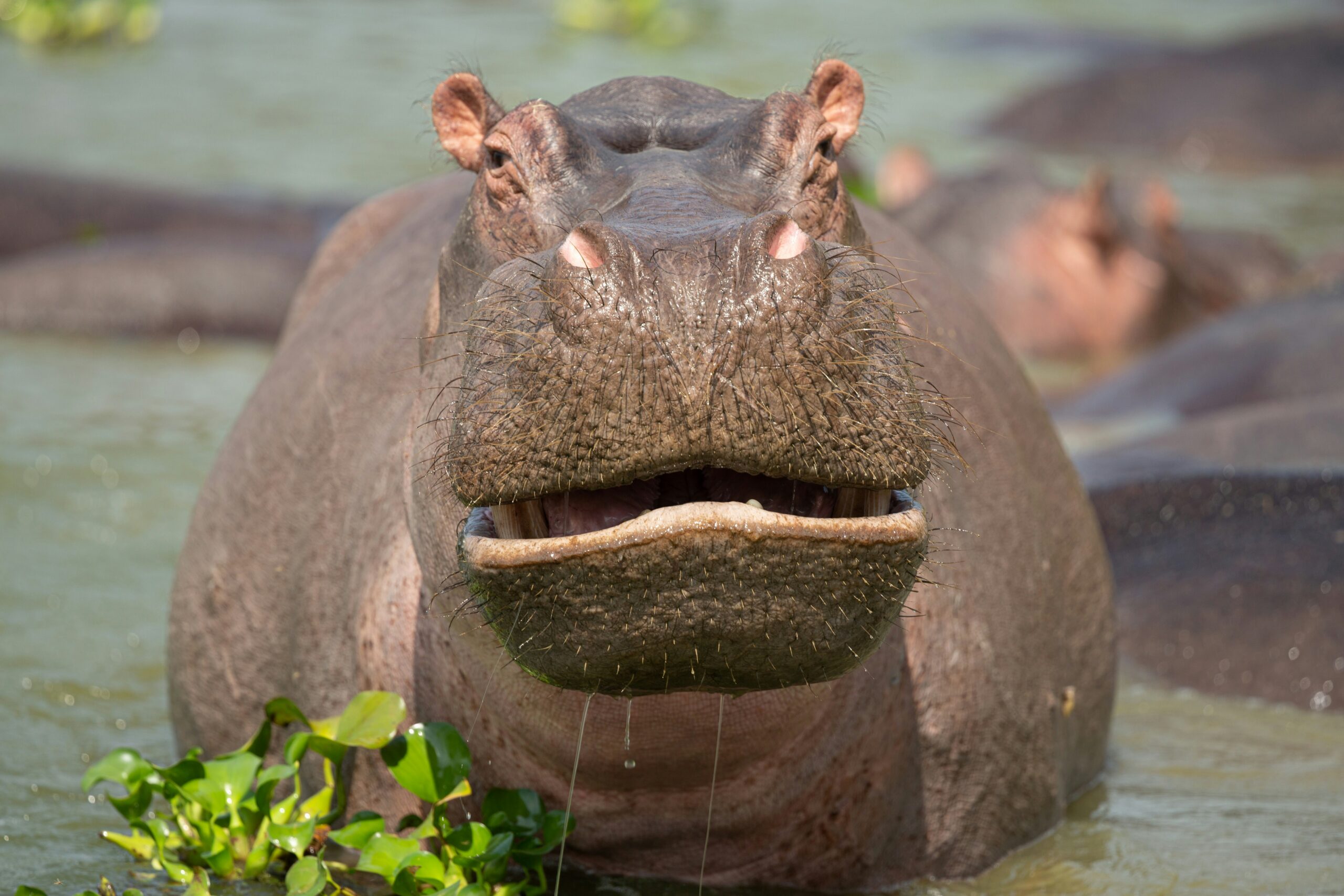
What Is a Hippopotamus?
Hippopotamuses, derived from the Greek term meaning “river horse,” are commonly called hippos. Hippopotamuses spend most of their time in rivers, lakes, and other freshwater habitats. They can be found in savannas and grasslands, from East to South Africa. They stay in the water because it helps them keep cool and protects their skin from the heat. Hippopotamuses are known as the largest animals in the wild. They are herbivorous animals. To learn more about hippopotamuses, explore the full article and discover their facts, habitat, and diet.
 Where Do Hippopotamuses Live?
Hippopotamuses are distributed across different parts of the world. Their native place is Africa, and they are mainly found in water bodies such as rivers, lakes, and other freshwater areas. They are found in savannas and grasslands across Eastern, Central, and Southern Africa, including countries such as Uganda, Kenya, Zambia, Tanzania, Guinea, Sierra Leone, and Liberia. Hippopotamuses spend most of their time in water, spending up to 16 hours a day there to stay cool and protected. They usually live in a combination of water and land. During the day, they remain in the water, while at night, they move onto land for food. Hippopotamuses mostly live in shallow water, which helps them stand easily while keeping their nostrils and eyes above the surface. It also helps protect them from predators, so they prefer shallow water where they can keep their eyes above the surface.
What Do Hippopotamuses Eat?
Hippopotamuses are herbivorous animals, which means they mainly eat plants. They feed on short grasses, neat fruits, and vegetables. They rarely eat meat and consume it only occasionally. Forest leaves, roots, fallen fruits, and grass are the main foods for hippopotamuses. They eat a small amount, only around 1 to 1.5 percent of their body weight. They eat less food according to their body weight because they spend most of their time in water, which helps them save energy. They spend only 4 to 6 hours at night eating their food. In their digestive system, food stays for a long time, which helps them extract as much nutrition as possible from a small amount of plant-based food.
Types of Hippopotamuses: Species and Key Differences
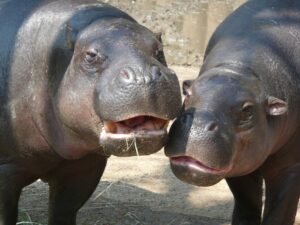
There are two types of hippopotamus species, known as the common hippopotamus and the pygmy hippopotamus.
| Feature | Common Hippopotamus | Pygmy Hippopotamus |
|---|---|---|
| Size | Around 1,300–1,800 kg and about 5 feet tall | Around 180–275 kg and about 2.5 feet tall |
| Range | Sub-Saharan Africa | West Africa, including Liberia and Guinea |
| Habitat | Rivers, lakes, and nearby land | Forests near water |
| Head and eyes | Eyes and nostrils are on top of the flathead, helping them see and breathe while in water. | Eyes are positioned on the side of the head. |
| Feet | Webbed feet adapted for swimming | Less-webbed feet with toes that help with movement on land |
| Teeth | Two to three pairs of lower incisors and a massive jaw gap of up to 180 degrees | One pair of lower incisors and a smaller jaw gap |
These are the key differences between common and pygmy hippopotamuses, including their size, range, habitat, lifestyle, and physical adaptations.
 Interesting Facts About Hippopotamuses
-
-
Hippopotamuses are known as the third-largest land mammals.
-
-
-
Hippopotamuses cannot swim like other mammals. They basically walk and push off the bottom of rivers while moving through the water.
-
-
-
Hippopotamuses can run up to 30 kilometers per hour.
-
-
-
Hippopotamuses are the most aggressive animals in the wild. They have killed more humans in Africa compared to lions and crocodiles.
-
-
-
Hippopotamuses can hold their breath for five minutes and can sleep while they are floating.
-
-
-
Hippopotamuses can secrete a reddish fluid, which acts as an antibacterial gel and sunblock.
-
-
-
Hippopotamuses’ closest relatives in the water are whales and dolphins.
-
-
-
A hippopotamus’s bite is stronger than a lion’s bite.
-
-
-
Common hippopotamuses are estimated to number around 115,000 to 130,000 in the wild, whereas around 2,500 pygmy hippopotamuses remain in the wild.
-
-
-
Hippopotamuses live in groups, known as a bloat, pod, or herd.
-
Threats and Conservation of Hippopotamuses
Major Threats
Hippopotamuses are facing critical survival pressure across Sub-Saharan Africa. Some of the major threats they face in the wild include:
-
-
Habitat loss
-
-
-
Poaching for meat
-
-
-
Human-wildlife conflict
-
-
-
Water pollution and degradation
-
Hippopotamuses are hunted for their meat and body parts. Habitat loss is an important challenge for both species, the common hippopotamus and the pygmy hippopotamus.
How Can We Conserve Hippopotamuses?
To conserve hippopotamuses, we should protect their natural habitats. We should stop or reduce hunting and maintain clean freshwater so they can survive and feel relaxed in their environment. We should also create conservation programs to spread awareness about hippopotamus conservation.
Both the common and pygmy hippopotamuses are part of the wild, and we should maintain nature for future generations. Therefore, we should work to save and protect them.
Conclusion
One of the most powerful, aggressive, and interesting animals, hippopotamuses are connected to both land and water. They feed on land at night and live in water during the morning. There are two living species of hippopotamuses, known as the common hippopotamus and the pygmy hippopotamus. They have different key features, including their size, habitat, and physical adaptations. Their natural habitats include rivers, lakes, and freshwater areas.
We should conserve them as much as we can. They face many threats, such as habitat loss, poaching, and human-wildlife conflict. They are an important part of the natural world, so we should help and preserve them for future generations. We should not destroy the environment of hippopotamuses. They are the important part of the wild.
FAQS
1. Is hippopotamus milk pink?
Hippopotamuses are not milk-pink. It is white, just like the milk of other mammals. They secrete an oily fluid from their body that looks red or pink, but it is not milk pink.
2. is hippopotamus dangerous?
Hippopotamuses are considered extremely dangerous and wild compared to lions and crocodiles. Many human deaths in Africa have been attributed to hippopotamuses. They have a very powerful bite and strong teeth.
3. Are baby hippos dangerous?
Baby hippos are not dangerous because they are calves. Their parents are very protective of their babies, especially their mothers. If any predator or human disturbs their calf, the mother may bite and attack the opponent. Hence, baby calves are not dangerous; their adult family members are dangerous when protecting them.
4. What is the lifespan of a hippopotamus?
Common hippopotamuses can live for around 40 to 50 years, whereas pygmy hippopotamuses can live for around 30 to 40 years in the wild.
5. What is a hippopotamus called in Hindi?
A hippopotamus is commonly called दरियाई घोड़ा (Dariyai Ghoda) in Hindi.
