Introduction
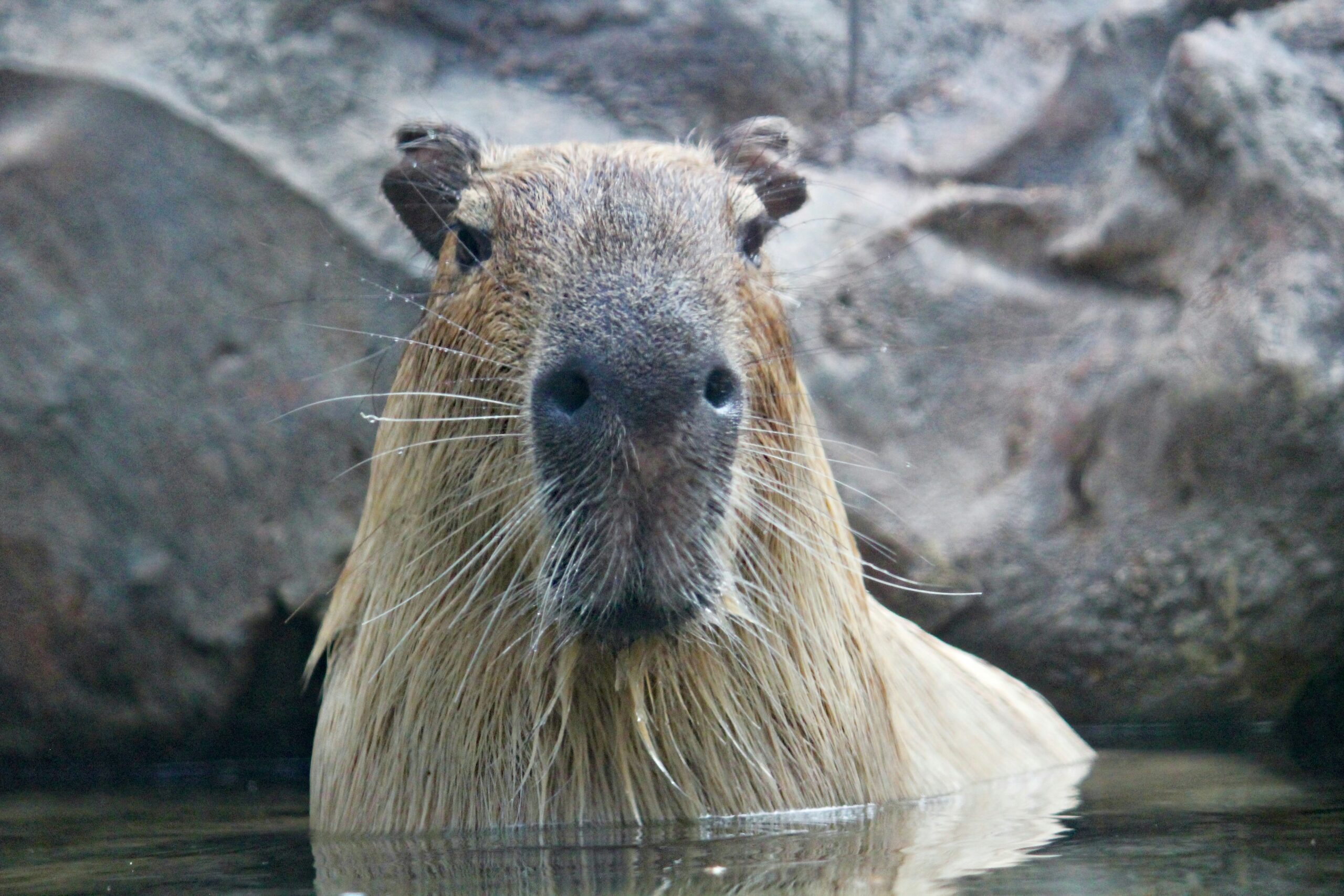
The capybara is one of the most unique and fascinating mammals found in South America. It is the largest rodent in the world and is well known for its calm nature and love of water. Capybaras usually live in groups and can be found near rivers, lakes, wetlands, and other water-rich habitats.
Their bodies are well adapted to spending time in and around water, which plays an important role in their daily lives. They have several interesting characteristics that make them different from many other animals. Scientifically known as Hydrochoerus hydrochaeris, capybaras are truly fascinating creatures.
To learn more about capybaras, including their habitat, behavior, diet, and unique adaptations, read the full article below and discover what makes these gentle giants so special.
Capybaras and Their Unique Physical Features
- Largest rodent: The capybara is the largest rodent in the world. It can grow up to 4 feet long and weigh up to 150 pounds.
- Webbed feet: Capybaras have webbed feet, which help them swim easily. They are excellent swimmers and are highly adapted to living around water.
- Eyes, ears, and nostrils: One of their most unique physical characteristics is that their eyes, ears, and nostrils are located on the top of their heads. This helps them stay mostly submerged in water while keeping cool and safe.
- Continuously growing teeth: Capybaras’ teeth grow continuously throughout their lives. Their teeth never stop growing.
- Adapted to water: Capybaras are excellent swimmers and are very well adapted to water. They enjoy swimming, floating, and relaxing in the water.
- Short legs: Capybaras have very short legs compared with their heavy bodies.
- No tail: Capybaras do not have a visible tail, which is one of their unique physical features.
- Ability to stay underwater: One of the most unique things about capybaras is their ability to close their ears and nostrils when they are underwater. When they feel threatened by predators, they can remain underwater to stay safe.
These are some of the physical characteristics that make capybaras unique among wildlife animals.
What Do Capybaras Eat? Exploring Their Diet
Capybaras are herbivorous animals. They mainly eat grass and plants such as switchgrass, sedges, Bermuda grass, reeds, and water hyacinth, which are commonly found near rivers and wetlands. They also eat aquatic plants, fruits, and leaves.
Their strong front teeth help them cut and chew tough grasses. Capybaras have a very high-fiber diet and a specialized digestive system that helps them digest the plants they eat. These grasses and plants provide them with the energy they need.
Capybaras also eat their own soft feces, a behavior known as coprophagy. Eating their feces helps them maintain healthy gut bacteria and stable microflora.
This is the unique diet of capybaras, which helps them get the nutrients and energy they need.
Interesting and Unusual Capybara Facts
- Calm and friendly nature: Capybaras are known for being polite, calm, and gentle animals. Because of their calm nature, other animals sometimes use them as living pillows. For example, monkeys and turtles have been seen resting or napping on their backs.
- Sleeping underwater: Capybaras can sleep in water while keeping their heads above the surface.
- Communication: Capybaras communicate with each other using different sounds, including barks, cackling, whistles, and teeth chattering.
- Oily skin: Capybaras produce an oily fluid from their skin that naturally acts as a moisturizer. It also helps provide protection from the hot South American sun.
- Not suitable as pets: Capybaras are not suitable pets because their bodies are adapted to living around water. They need large swimming pools to stay healthy and regulate their body temperature. They also live in large groups in the wild, so keeping a capybara alone can cause it to experience stress.
- Chewing habits: Capybaras chew wood, plants, and grasses. When kept in a home, they may also start chewing household items, such as wood or other things that their teeth can break or chew.
These are some of the unique facts about capybaras that make them such interesting animals.
Capybara Family and Babies
Capybara mating usually happens during the rainy season. Capybaras mate in water, which is another example of how well adapted they are to their watery environment.
The female capybara has a pregnancy period of about 130 to 150 days. Female capybaras give birth to around eight babies, which are known as pups.
Capybara pups are born with their eyes fully open. One of their unique characteristics is that they can walk, run, and swim within a few hours after birth. The pups weigh around 1 kg when they are born.
At around 18 months, the pups grow into adult capybaras. Adult capybaras protect their young from predators such as dogs, wild dogs, jaguars, caimans, and many other wild predators.
This is the life cycle of capybara families, from reproduction and birth to the growth and protection of their young. It is one of the unique aspects of capybaras.
Capybaras: Threats and Conservation
Capybaras are one of the most unique and calm animals in the wild. However, they face several threats in their natural environment, such as hunting and poaching, natural predators, habitat loss, and human conflict.
Sometimes, farmers clear forests and build cities in these areas, which destroys the habitats where capybaras live. People also hunt capybaras for their meat and skin. They are sometimes captured for the illegal pet trade as well.
Capybaras are also prey for wild animals. Predators such as jaguars and wild dogs may hunt and eat them, making them part of the natural food chain.
To protect capybaras, we should stop cutting down forests and create laws to prevent illegal hunting and poaching. We should also make people more aware of capybaras and start programs that focus on their conservation.
These are some of the ways we can help protect capybaras and make sure these cute and calm animals continue to live in nature for future generations.
Conclusion
Capybaras are fascinating and unique creatures on this earth. They are not endangered. They are a food source for many predators, such as jaguars, wild dogs, and anacondas. Humans also hunt capybaras for their meat and skin.
One of their unique features is that their ears, eyes, and nostrils are located on the top of their heads. They are good swimmers and have many unique characteristics and traits. They are also one of the calmest animals on this planet.
Capybaras depend on natural habitats for food, water, and shelter. They are found in grasslands, wetlands, and other areas that support their populations. We should conserve them, understand their natural environments, and think about future generations.
Capybaras are truly unique animals that are important to our planet.
 FAQS
FAQS
1. Are capybaras endangered?
No, capybaras are not endangered. They have a large population across South America. However, they still face several threats, including hunting, habitat loss, human conflict, and illegal hunting and poaching.
Making conservation efforts to protect capybaras can help ensure that their population remains stable and that they continue to live safely in nature for future generations.
2. How much does a capybara cost?
Capybaras can cost around $1,000 to $3,500, while their annual expenses can range between $800 and $3,000.
If we talk about the total expense, including their accessories and other requirements, the cost can be around $2,000 to $7,000 for two capybaras.
A deep pool or pond can cost around $5,000 to $2,000, while a secure enclosure and shelter can cost around $1,000 to $6,000.
3. Are capybaras good pets?
Capybaras are not good pets. Yes, they are calm and cute animals. They allow monkeys, turtles, and other animals to rest on their backs. However, they are still not good pets to keep at home because they live in groups.
They need a full swimming pool to live and relax. Their teeth are very sharp, and they eat grass, plants, and wood. If they are kept in a house, they may destroy the furniture.
There are many other aspects that are important to look after. Therefore, capybaras are not good pets to keep at home.
4. What is a capybara?
The capybara is known as the largest living rodent in the world. It looks like a giant guinea pig with a heavy-shaped body. Capybaras have very unique characteristics and different kinds of features. They live in water, rivers, and lakes. They are good swimmers and can hold their breath for around five minutes while in water.
Capybaras have a habit of living in groups. They are herbivores and have many other unique characteristics. They are also one of the calmest animals in the wild.
5. Where do capybaras live?
Capybaras live in South America. They are found in countries such as Colombia, Brazil, Argentina, Venezuela, Peru, and Florida. They are mostly found near water, wetlands, and forests. Capybaras spend a lot of time in water because they are good swimmers and feel relaxed and comfortable there.
