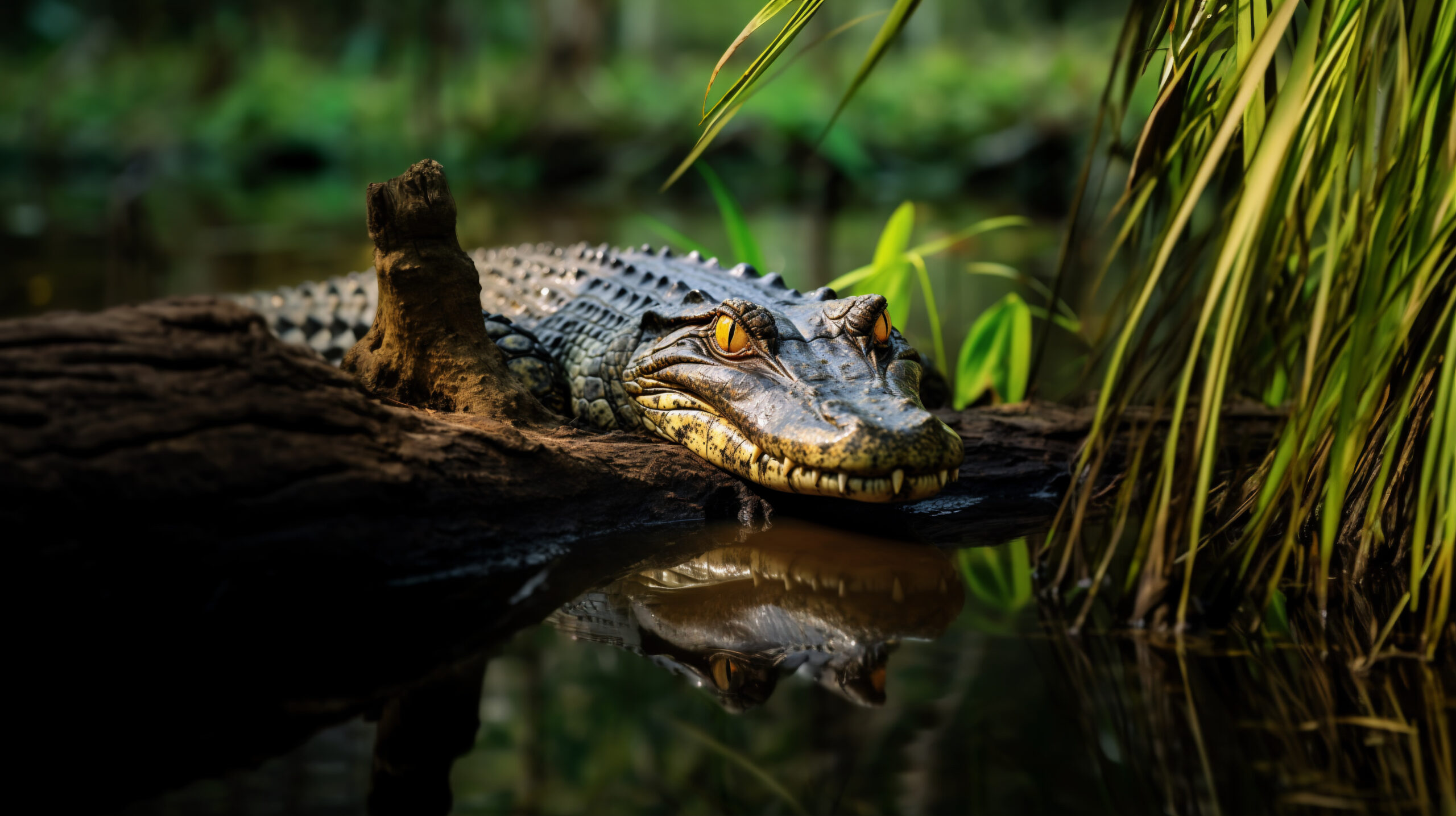

What Is a Crocodile, and Why Is It Such a Powerful Predator?
Crocodiles are referred to as giant reptiles because of their strong jaws and unique salt glands, which enable them to live in saltwater habitats. They are skilled hunters and have a 24-hour breath-holding capacity. They are found in tropical regions of Africa, Asia, the Americas, and Australia, where they live in rivers, lakes, and wetlands. When they close their jaws, both their upper and lower teeth are visible. They have lived for millions of years on land and in water, and they have an exceptional hunting style. Crocodiles are also known as apex predators. Crocodiles can hold prey; they don’t chew due to their specialized conical teeth. They are very strong and powerful in catching prey.
If you enjoy learning about large animals, you can also read our guide about turtles here: https://animalstudieslab.com/turtles-habitat-diet-types-behavior-and-lifespan/
What Physical Features Help Crocodiles Survive?
As mentioned previously, their conical teeth and strong jaws allow them to grip their prey instead of chewing it. They also have eyes, ears, and nostrils on top of their heads, which enable them to see, hear, smell, and breathe. They can swim quickly due to their incredibly streamlined body and tail, and they have salt glands that allow them to eliminate salt. Additionally, they can control their oxygen levels while diving according to their four-chambered hearts. They have osteoderms, which means that bony plates cover their back. They weigh over 1200 kg and have a maximum length of 7 meters. Collagen fibers and connective tissues, which give the skin its well-known strength and softness, are numerous in the thicker layer. The skin’s adaptations include strong UV protection through thick, keratinized scales, efficient waterproofing through specialized scales and oil-producing glands, and sophisticated concealment through changing coloring. Because of these characteristics, crocodile skin is among the best reptile attachments for surviving in a variety of settings.
Crocodile Diet: What Do These Powerful Predators Eat?
As predators, crocodiles are carnivorous. Their primary food sources include fish, birds, reptiles, and mammals. The majority of baby crocodiles typically consume insects, tiny fish, and frogs, while larger adults seek larger creatures like deer or wild pigs. They frequently skip meals for weeks or months at a time. About two to five pounds of meat are consumed daily on average. They may go without nourishment for up to two years.

How Do Crocodiles Lay Eggs and Raise Their Young?
Male crocodiles mate underwater after attracting females with their head-raising and tail arch. A land-based crocodile’s nest typically contains 25 to 90 hard-shelled eggs, and some females are capable of producing offspring without fertilization. For around three months, female crocodiles guard their nest and keep predators away. To prevent them from being crushed, female crocodiles employ detectors in their jaws. The largest species, 3–6 meters, matures sexually between the ages of 10 and 15. They start reproducing after this. The smaller species, 1-3 meters, can, however, become sexually mature as early as age 4. Temperature determines the sex of each young crocodile hatchling; at low temperatures, most females hatch. and male hatching at intermediate and high temperatures. Crocodiles build nests underwater to avoid flooding and make it easy to travel. For more scientific information about the crocodile and its conservation status, visit this resource: https://www.iucncsg.org/pages/crocodiles
What Threats Do Crocodiles Face, and How Are They Protected?
Threats to crocodiles include habitat destruction, illegal hunting and poaching, accidental fishing captures, pollution, mining, and—most importantly—climate change. Retaliatory killings also occur. For instance, if humans respond, they kill crocodiles to protect themselves and to obtain leather and flesh. If they get trapped in nets, fishermen will even kill them. They are having problems because of heavy metals, noise pollution, and water pollution. Additionally, crocodile nesting environments are seriously threatened by sea level rise, particularly for mound-nesting species that require freshwater for reproduction.
There are important crocodile conservation initiatives. We should first begin protecting rivers and wetlands from pollution and deforestation. Put an end to illegal crocodile hunting and poaching. Strict laws against hunting should be put into place. We ought to establish safe places for nesting. To safeguard core breeding, nesting areas, and sunbathing, we should establish no-entry zones.
Explore the life of this rare mountain predator in our article on snow leopards: https://animalstudieslab.com/snakes-habitat-diet-behavior-and-adaptations-explained/
What Are the Different Types of Crocodiles Found Around the World?
Crocodiles come in 26 different species. There are three primary families among them. There are sixteen species of true crocodiles, for example, the saltwater crocodile, the Nile crocodile, the American crocodile, and the mugger crocodile. Second, there are two species of gharials, for example, the false gharial known as Tomistoma, and eight kinds of alligators and caimans, for example, the American alligator and the Chinese alligator. Black caiman, spectacled caiman, and yacare caiman.
Conclusion

Additionally, crocodiles are crucial to the maintenance of ecosystems. As apex predators, they contribute to maintaining the balance of aquatic environments by regulating fish and other animal populations. By eliminating diseased or weak animals, they also help rivers and wetlands stay healthy by stopping the spread of illness. Because of its amazing adaptations, the crocodile survived for millions of years, making it one of the most powerful and ancient reptiles on the planet. Their protective parenting style and distinctive reproduction strategy also contribute to their young’s survival in harsh conditions.
FAQS
1. How long can crocodiles live?
Crocodiles have an extremely long lifespan. Many species have lifespans of 50 to 70 years, and in protected areas, some may live even longer.
2. How long can crocodiles stay underwater?
Crocodiles can hold their breath for up to two hours while at rest; however, they can typically stay underwater for 15 to 30 minutes.
3. Do crocodiles sleep?
Crocodiles do sleep, yet they still maintain a high level of alertness. They frequently take a nap close to the water, keeping their senses alert for potential threats or prey.
4. How many teeth do crocodiles have?
The majority of crocodiles have between 60 and 72 teeth, and during the course of their lifetimes, they can replace missing teeth multiple times.
5. Are crocodiles dangerous to humans?
Crocodiles can be dangerous if humans enter their territory. However, attacks are rare and usually happen when people get too close to their habitat.
