Home UncategorizedLife in the Ice: How Polar Bears Survive the Harsh Arctic Climate

Life in the Ice: How Polar Bears Survive the Harsh Arctic Climate

by kulsumkhan8766@gmail.com

 Introduction

The polar bear, which lives in the Arctic, is the biggest natural carnivore. They have a hard time finding food because they reside in freezing, chilled locations. Ursus maritimus, which refers to “sea bear” in Latin, is the common name for the polar bear. It is the only known species of polar bear. A group of polar bears is known as a “sleuth” or a “pack.” Although certain populations can be found in more southern regions, including the Hudson Bay in Manitoba, Canada, the majority of polar bear populations are found north of the Arctic Circle. Polar bears can also be found in the northern Norwegian islands, Greenland, Alaska, and Russia. The number of polar bears in the wild is between 22,000 and 31,000.
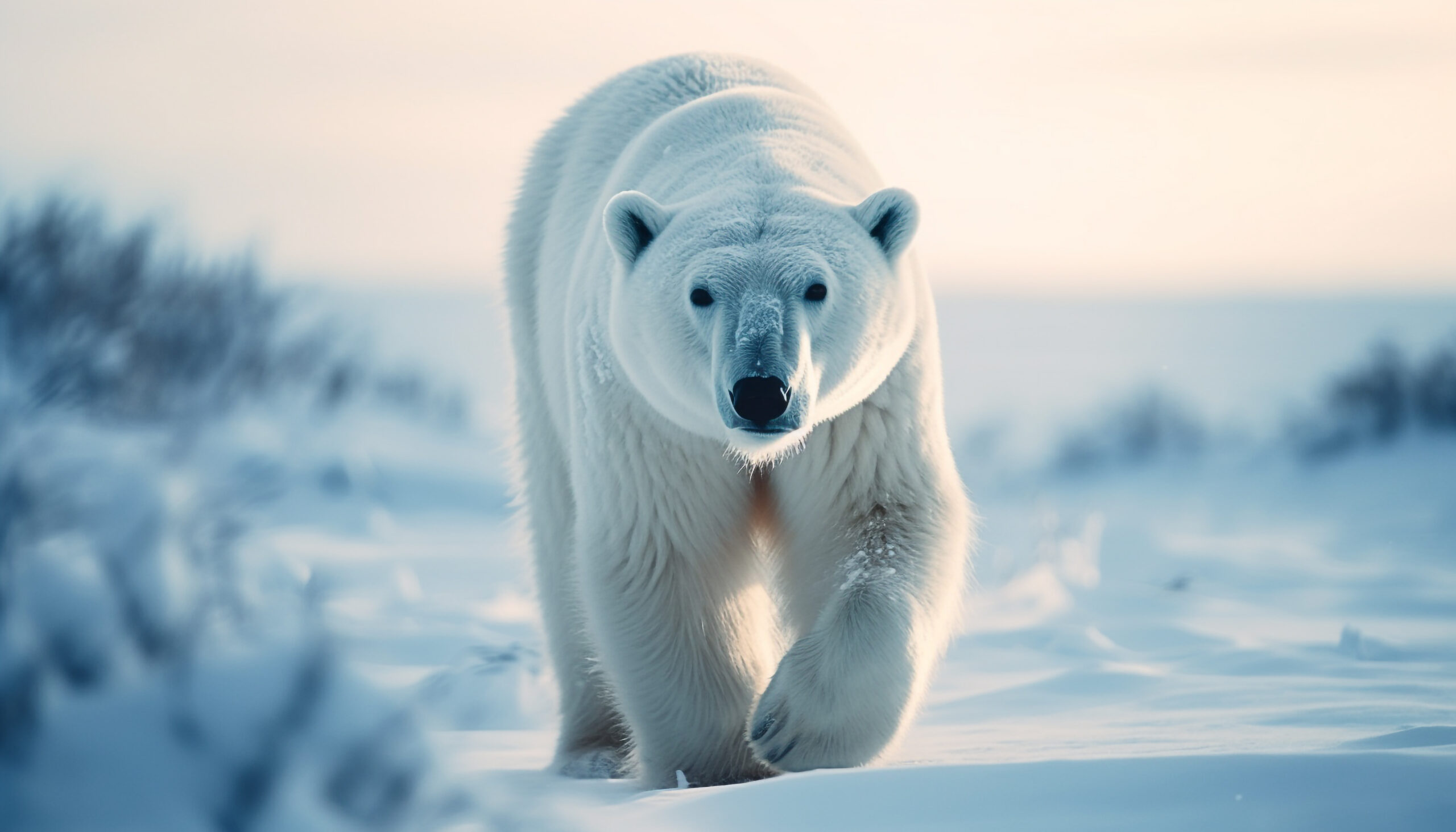
Polar bear walking across Arctic sea ice searching for seals

How Does a Polar Bear Survive in One of the Coldest Places on Earth?

Polar bears can survive below 40 degrees Celsius. Their physical characteristics and insulation enable them to persevere in one of the world’s coldest regions. They have a thick layer of fat, or blubber, that is 11.4 cm thick and serves as insulation for them in freezing water and on land. In the second stage, they have two layers of fur that keep them warm and an outer covering of long guard hair that acts as a raincoat and prevents water from getting to the skin. Additionally, their short tail and tiny ears. reduce the amount of surface area that is exposed to the cold, and their black skin improves in their ability to absorb solar heat. Finally, their feet are warm. It indicates that they have fur-covered paws and tiny ridges on their foot pads that support them and give them better grip on ice and insulation.

How Does a Polar Bear Hunt in the Icy Waters of the Arctic?

Seals are polar bears’ favorite food, and they can locate seals using their strong sense of smell. They may have to wait days or even hours for a seal. To locate the seal, they can also swim beneath the frozen surface. Seals are essentially occasionally captured underwater by water bears. Ringed seals and bearded seals are essential and significant components of polar bears’ diet. Additionally, they occasionally eat fish, small mammals, bird eggs, and fat-rich seals to satisfy their body’s water requirements. They have fewer hunting possibilities as a result of climate change. When summer arrives, they begin searching for carcasses like sperm, grey, or bowhead whales, which provide polar bears with a high-energy food supply. Summertime is when they look for them because the sea ice melts and they ultimately come to land.
Just like polar bears have unique adaptations to survive the Arctic, giraffes have amazing features to reach high leaves. Learn more about the amazing adaptations of giraffes here: https://animalstudieslab.blogspot.com/2026/03/giraffe-facts-habitat-height-behavior-diet.html

How Do Polar Bears Reproduce in the Harsh Arctic Environment?

March to June is when polar bears breed. They ensure that the cubs are born during the winter. On the sea ice, male polar bears follow female polar bears by scent. Male polar bears compete with one another. To mate with the female polar bear, they engage in a fight with one another. Additionally, the fertilized eggs fail to comply with the uterus right away. Only around October or November will the egg implant and begin to mature if the mother has put on enough weight. Furthermore, cubs are born between November and January inside the den. Males are not involved in the cubs’ upbringing. Cubs are born inside as well. Additionally, they are blind and extremely little, weighing less than 1 kilogram at birth. Female polar bears are extremely protective.

Why Are Polar Bears Struggling to Survive in the Changing Arctic?

Polar bear walking across the icy Arctic landscape
The primary cause is climate change brought on by ice melting earlier and freezing later. Bears from the polar region are spending more time on land. They become hungry as a result, and their body weight decreases, and their ability to reproduce declines. Additionally, as a result of the ice melting, they are having very few opportunities to hunt. They are generating problems with immunity and reproduction because of pollution. Polar bears are infiltrating human areas in search of food, and increased shipping and environmental noise result in habitat degradation. Polar bears are being murdered as a result of human self-defense.
📌 Want to discover more amazing facts about polar bears? Visit our Pinterest pin by Animal Studies Lab:
https://in.pinterest.com/pin/1134484962400764883

What Efforts Are Being Made to Protect Polar Bears in the Arctic?

We must take a few minor steps that will benefit polar bears in order to conserve them. Purchasing green energy is the first step. In order to lower greenhouse gas emissions, we should start utilizing renewable energy sources like wind, low-impact hydro, and landfill gas. Eco-friendly energy is what we should use. Second, since LEDs require less energy and have an environmentally beneficial manufacturing method, we should switch from light bulbs to LEDs. And as a result, using LEDs will reduce pollution. Additionally, we ought to start making donations to entities that can conserve polar bears, like Polar Bear International, the WWF World Wildlife Fund, and regional Arctic research organizations.

What Are Some Surprising Facts About Polar Bears?

  • Polar bears’ fur is not white; it is transparent.
  • Polar bears sleep for around 7-8 hours a day.
  • Polar bears can swim up to 100 miles continuously.
  • Polar bear average life span is 15-18 years.
  • Mother polar bear milk provides 31% fat, which gives rapid growth to their cubs.
  • 70% of the cubs do not live due to environmental conditions.
  • Polar bears see humans as their food, and they are highly aggressive and dangerous. 
  • Polar bears maintain hygiene so that they can keep their fur insulating.
  • Polar bears bite the neck when they are fighting for food or a mate.
  • Polar bears can eat up to 45 kg in one sitting.
While polar bears thrive in the icy Arctic, penguins have their own unique adaptations to survive in cold environments. Learn more about penguins and their amazing adaptations here: https://animalstudieslab.blogspot.com/2026/03/20-amazing-penguin-facts.html

Conclusion

Polar bears play a critical role in preserving the Arctic’s natural balance. As apex predators, they are essential to the Arctic food chain and aid in controlling seal populations. Polar bears are also regarded by biologists as a crucial indicator species since shifts in their numbers and behavior frequently reflect changes in the Arctic environment. Polar bears have the perfect abilities for surviving in one of the planet’s toughest habitats. These amazing predators are strongly linked to the health of the Arctic ecosystem because they primarily depend on sea ice for hunting and raising the next generation.
For more details on polar bear habitats and threats, check out WWF – Polar Bears https://www.worldwildlife.org/species/polar-bear

FAQs

Polar bear swimming in icy Arctic waters


1. How fast can polar bears run on land? 

Polar bears can run up to about 40 km/h (25 mph) for short distances.

2. How far can polar bears travel in search of food?

Polar bears can travel hundreds of kilometers across sea ice in search of food.

3. How big can a polar bear grow?

They can grow up to 3 meters in length and they weigh between 350 and 700 kg

4. In which areas can polar bears not survive?

Due to their unique adaptation to the frigid climate of the Arctic, polar bears cannot survive in warm climates. Additionally, they cannot live in Antarctica, which is at the South Pole, and polar bears are only found natively in the Arctic around the North Pole.

5. Can polar bears survive without sea ice? 

Without sea ice, it becomes very difficult for polar bears to hunt, travel, and raise their cubs.

You may also like

Leave a Comment