What Beginners Should Know About Sloths
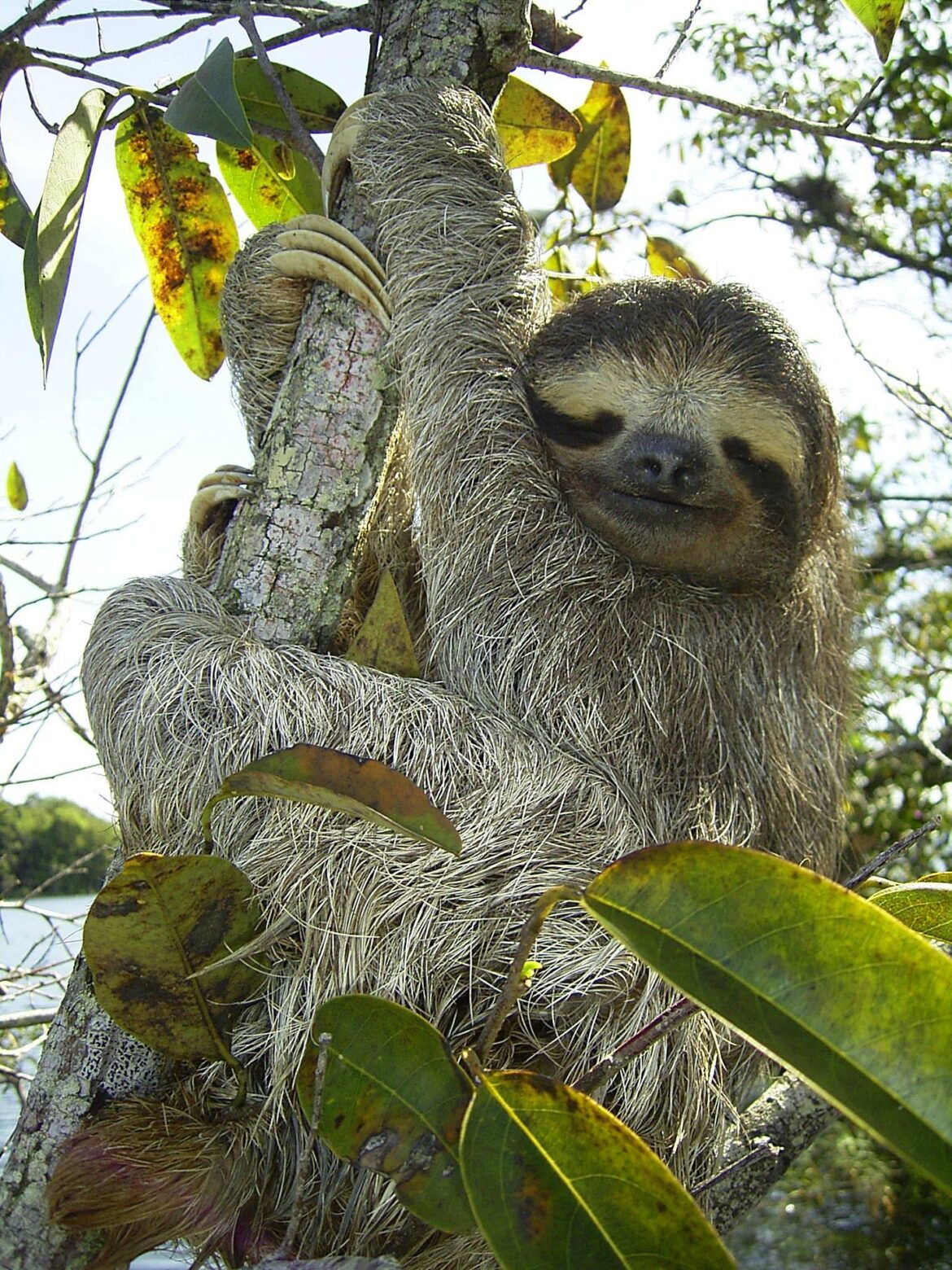
Sloths are among the most fascinating animals in the world, best known for their slow movements and peaceful lifestyle. They live mainly in tropical forests, where they spend most of their time hanging upside down from tree branches. Despite their slow nature, sloths have several remarkable adaptations, including long claws, specialized feeding habits, and an impressive ability to swim. These unusual characteristics make them truly fascinating animals to study. In this article, we will explore the sloth habitat, behavior, species, lifespan, diet, adaptations, and many other interesting facts about these remarkable mammals.
Want to learn how animals survive in extreme environments? Explore our article on https://animalstudieslab.com/life-in-the-ice-how-polar-bears-survive-the-harsh-arctic-climate/
Different species of sloths
Sloths are divided into two main groups: two-toed sloths and three-toed sloths. There are two living species of two-toed sloths and four living species of three-toed sloths, making a total of six living sloth species. Below, we will explore the key differences between these species and learn what makes each one unique.
Three-Toed Sloth
Brown-Throated Three-Toed sloth
The brown-throated three-toed sloth is one of the most common sloth species. An adult usually weighs around 2.25 to 6.3 kg and can grow about 42 to 80 cm long. Its tail is short, measuring around 2.5 to 9 cm.
One interesting thing about this sloth is that it has extra neck bones. These bones give it more flexibility and allow it to turn its head up to 270 degrees.
Brown-throated three-toed sloths spend most of their lives in trees. They usually come down from the trees only about once a week to poop on the ground.
Their fur also has a special feature. The hair grows from the belly toward the back. This helps rainwater run off their body easily when they are hanging upside down from tree branches.
Maned Sloth
The maned sloth is about 55 to 75 cm long and weighs around 4 to 10.1 kg. It has a short tail that is usually around 4 to 5 cm long.
One of the most interesting features of the maned sloth is its very flexible neck. It has extra neck bones that allow it to turn its head up to 270 degrees.
Algae grow on the fur of maned sloths, which gives it a greenish color and helps it blend into the trees. This natural camouflage makes it harder for predators to spot.
Maned sloths are not good at walking on the ground. Instead, they drag themselves along the ground using their front claws. They are much more comfortable living and moving in trees.
Pale-Throated Three-Toed Sloth
The pale-throated three-toed sloth is about 45 to 75 cm long and weighs around 3.2 to 6.5 kg. It has a short tail that is usually about 2 to 11 cm long.
One interesting feature of this sloth is its coarse fur, where green algae can grow. The algae can give its fur a greenish color, helping it blend in with the trees and making it harder for predators to spot.
Like other three-toed sloths, it has extra neck bones, which give its neck great flexibility. It can turn its head by up to around 330 degrees.
Another interesting feature is the dark fur around its eyes, which looks like a natural mask. This gives the pale-throated three-toed sloth a distinctive appearance.
Pygmy Three-Toed Sloth
The pygmy three-toed sloth is about 48 to 53 cm long and weighs around 2.5 to 3.5 kg. Its tail is short, measuring about 4 to 6 cm.
One interesting thing about pygmy three-toed sloths is that they are good swimmers. They can move through water easily when needed.
Like other sloths, they move very slowly, which helps them save energy. They are found only on a small island called Isla Escudo de Veraguas, located off the coast of Panama.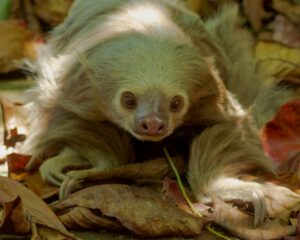
Two-Toed Sloth
Linnaeus’s Two-Toed Sloth
The two-toed sloth is around 46 to 89 cm long and weighs about 4 to 11 kg. It has a very short tail, measuring only around 1.5 to 3.5 cm.
They also have a very slow digestive system. Their food can take a long time to digest, and some meals may take several weeks to fully pass through their digestive system.
Hoffmann’s Two-Toed
The Hoffmann’s two-toed sloth is about 50 to 75 cm long and weighs around 2.1 to 9 kg. Its tail is very short, measuring about 1.4 to 3 cm.
One of its most interesting features is its long, curved claws. These claws work like hooks and help the sloth hold onto tree branches, even while it is sleeping.
Hoffmann’s two-toed sloths are mainly active at night. They spend much of their nighttime looking for food and moving around the trees.
Where Do Sloths Live in the Wild?
Different sloth species are found in different parts of Central and South America. Most of them live in tropical and rain forests, where they spend most of their time in trees.
- Brown-throated three-toed sloth: Found mainly in Honduras, Nicaragua, Costa Rica, Panama, Colombia, Venezuela, Ecuador, Peru, Bolivia, Brazil, Paraguay, and Argentina.
- Pale-throated three-toed sloth: Mainly found in Guyana, Suriname, French Guiana, Venezuela, and northern Brazil.
- Maned sloth: Found only in Brazil, mainly in parts of the Atlantic Forest along the eastern coast.
- Pygmy three-toed sloth: Found only on Isla Escudo de Veraguas, a small island off the Caribbean coast of Panama.
- Hoffmann’s two-toed sloth: Found from Honduras, Nicaragua, Costa Rica, and Panama to Colombia, Venezuela, Ecuador, Peru, Bolivia, and western Brazil.
- Linnaeus’s two-toed sloth: Found in parts of northern South America, including Venezuela, Guyana, Suriname, French Guiana, Colombia, Ecuador, Peru, and Brazil.
These sloths can live in several types of forests, including the Amazon rainforest, Atlantic Forest, Chocó rainforest, Central American tropical rainforests, Guiana Shield rainforests, Andean cloud forests, and tropical dry forests.
Although all sloths spend most of their lives in trees, each species has its own geographic range and preferred habitat.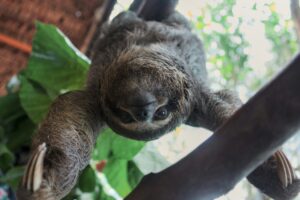
What Do Sloths Eat? A Look at Their Leaf-Based Diet
Sloths are herbivores, and most of them are folivores, which means they mainly eat leaves. Their diet can vary depending on the species, habitat, and plants available in their forest.
Sloths have a slow metabolism, so they do not need to eat large amounts of food. They mainly eat plant parts that are easy to find in the trees where they live.
Here is what different sloth species eat:
- Brown-throated three-toed sloth: Eats leaves, young shoots, buds, and flowers from different trees.
- Pale-throated three-toed sloth: Mainly eats leaves, young shoots, and other soft plant parts.
- Maned sloth: Mainly feeds on leaves from trees and vines found in Brazil’s Atlantic Forest.
- Pygmy three-toed sloth: Mainly eats leaves from mangrove trees growing on the island where it lives.
- Hoffmann’s two-toed sloth: Eats leaves, fruits, flowers, and young shoots.
- Linnaeus’s two-toed sloth: Feeds on leaves, fruits, flowers, and young shoots.
The exact diet of each species depends on the plants available in its habitat. This allows sloths to survive on the food resources found in the forests where they live.
Discover more about marine mammals and their fascinating adaptations in our complete guide to https://animalstudieslab.com/complete-guide-to-whales-types-adaptations-lifestyle-and-importance-in-marine-ecosystem/
7 Mistakes to Avoid When Visiting a Sloth Sanctuary
When visiting a sloth sanctuary, it is important to respect the animals and give them enough space. Here are some simple rules to follow:
- Do not try to take pictures with sloths.
- Do not touch or hold sloths.
- Never feed the sloths.
- Avoid wearing strong perfumes or scents.
- Avoid wearing very bright-colored clothes.
- Do not make loud noises.
- Keep a safe distance from the animals.
The most important thing to remember is to observe sloths quietly from a safe distance. Following these simple rules helps keep the sloths comfortable and makes the visit safer for both the animals and visitors.
Conclusion
As we have seen above, sloths are unique animals known for their slow movements, quiet lifestyle, and slow metabolism. There are six living species of sloths, and each species has different features, diets, habitats, and geographic ranges.
The most important thing we should remember is that we need to protect sloths and their natural habitats. Forests are essential for their food, shelter, safety, and survival. We should work to reduce deforestation and protect the forests where sloths live. This will help ensure that these unique animals continue to survive for future generations.
For more information about sloth conservation, species, and their natural habitats, visit the IUCN SSC Anteater, Sloth and Armadillo Specialist Group.
 FAQS
FAQS
1. Are sloths dangerous?
Sloths are not dangerous animals, but we should still maintain a safe distance when visiting their sanctuary. We should be cautious and remember a few important points, such as not taking pictures with them, not getting too close to them, and always maintaining a proper distance. Although sloths are peaceful animals, respecting their space is important when we are around them.
2. How do sloths survive?
Sloths can survive in both wet and dry tropical regions. They are adapted to live through different seasons while spending most of their time on tree branches. Their movements and metabolism are very slow, and they mainly feed on leaves. Sloths are also good swimmers and can spend time in water when needed. Their adaptations help them survive in different seasonal conditions.
3. How long do sloths live?
Sloths generally live for around 20 to 30 years in the wild. Sloths living in captivity may live longer, sometimes reaching 40 to 50 years.
Sloths are divided into two main groups: two-toed sloths and three-toed sloths.
Two-toed sloths: They can live for around 20 years in the wild, while those in captivity may live for 30 to 40 years or more.
Three-toed sloths: They generally live for around 25 to 30 years in the wild. Their lifespan in captivity is more difficult to determine because reliable information is limited.
4. Can a sloth jump?
Sloths cannot jump. They have very little muscle mass, making up around 30% or less of their body weight. Their bodies are mainly adapted for hanging from tree branches. They can also swim by using their long arms to paddle through the water.
5. Why are sloths so slow?
Sloths are slow because of their diet and slow metabolism. They are mainly leaf eaters and mostly eat leaves, buds, and other plant parts, which provide them with limited energy. They also have a slow digestive system, so their bodies take a long time to digest food. Because they get less energy from their diet and have a slow metabolism, they naturally move very slowly.