60

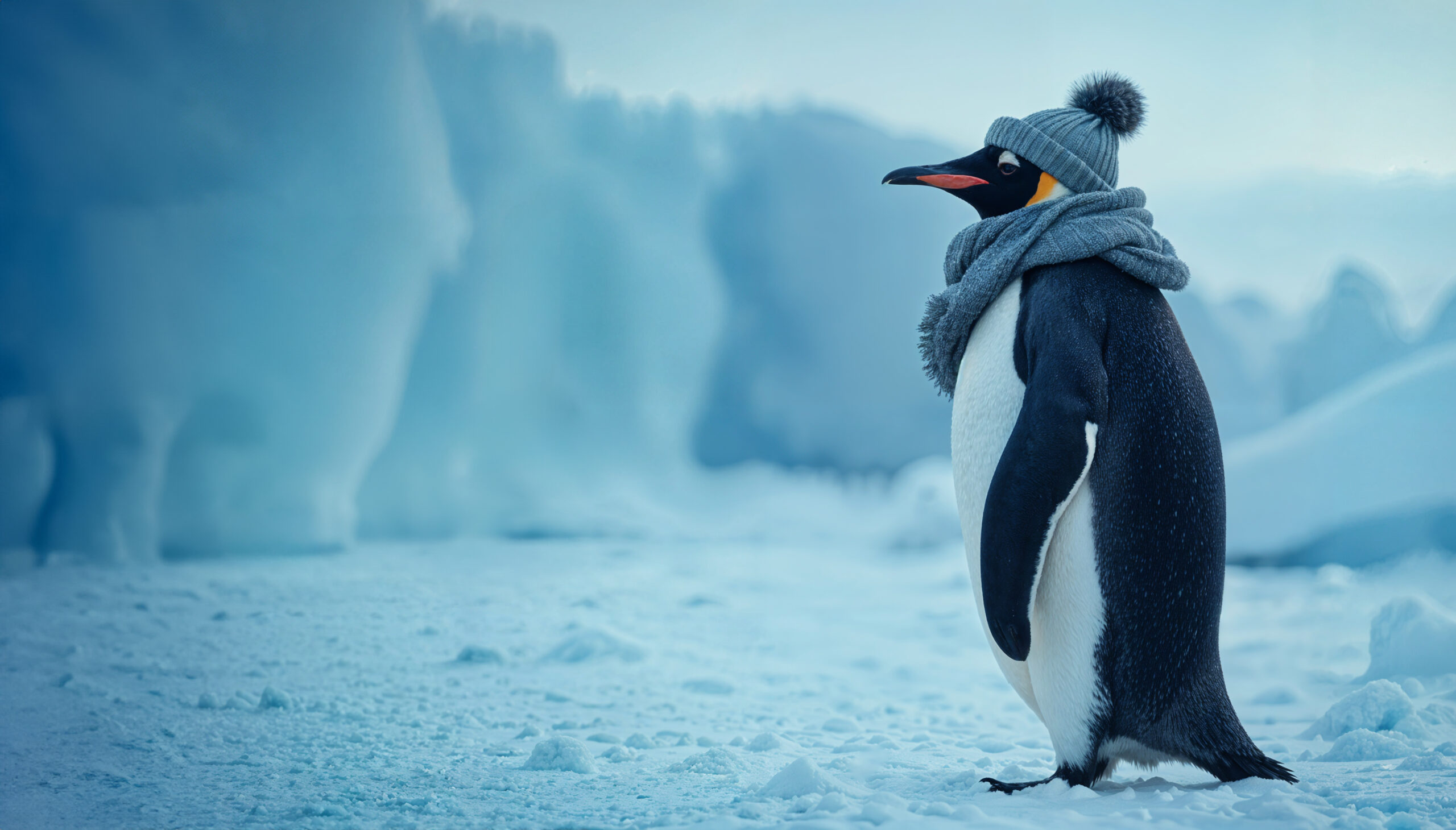
Penguins live in some of the most extreme weather, from the icy plains of Antarctica to the hot equatorial waters of the Galapagos. They spend months at a time in the ocean. Penguins are birds, but they don’t have wings; they have flippers. They can’t fly, and when they’re on land, they walk upright. But when the snow is just right, they can slide on their belly parts.
Penguin Characteristics
INTERESTING FACTS:
- The emperor penguin is the tallest living penguin, standing at approximately 1.1 to 1.3 meters.
- Penguins can drink salt water.
- Penguins are exceptional, specialized swimmers that use paddle-like flippers to fly underwater at speeds of 15-25 mph.
- A group of penguins is called a colony, rookery, or huddle when on land and a raft when in the water.
- Chinstrap penguins survive by taking over 10,000 ‘microsleeps’ per day, each lasting only about 4 seconds, for roughly 11 hours of daily rest.
- Penguins are oviparous, laying one or two eggs per season.
- Penguins have a third eyelid known as a nictitating membrane that acts as goggles, which protects their eyes underwater.
- Penguins typically have a lifespan of 15-20 years.
- smallest penguin known as little blue penguins
- Penguins are carnivorous; when it comes to food, they consume a diet of fish, krill, and squid, often catching prey while swimming.
- Penguins have 18 recognized species.
- The African penguin is called the black-footed penguin, the Cape penguin, or the jackass penguin.
- Galapagos penguins are the rarest penguin species in the world, with only 1200 remaining in the world.
- The yellow-eyed penguin is one of the rarest penguin species in the world. suffering from habitat degradation.
- Northern rockhopper penguins are slightly larger and have longer crests as compared to southern rockhoppers, as they have smaller, spiky crests.
- Emperor and king penguins typically lay a single egg.
- Some penguins spend as much as 75% of their lives in the sea.
- The Galapagos penguin is the only species that lives near the equator.
- The African penguin is facing the most immediate threat of extinction; fewer than 10,000 breeding pairs remain.
- Chinstrap penguins are the most aggressive and short-tempered. They will attack the trespasser.
Wierd and Unusual Facts
Most penguins live in the Southern Hemisphere. Many animals live in Antarctica, but others live in South America, Africa, Australia, New Zealand, and the Galápagos Islands. Different types of species have learned how to live in both cold and warm places.
Are penguins birds or animals?
They belong to the bird class, but they cannot fly. Their wings help them swim and function as flippers.
What is a baby penguin called?
Baby penguins are known as chicks. A group of baby penguins is known as a crèche or a nursery. Chicks grow very fast and develop adult-like waterproof feathers.
Are penguins mammals?
Penguins are known as flightless birds. They are not classified as mammals. They neither produce milk nor feed their young ones with milk.
What do penguins eat?
Penguins are carnivorous. They eat fish, jellyfish, squid, krill, and crustaceans. These are some of the basic foods of penguins.
To learn more about penguin conservation and the challenges facing different penguin species, visit the IUCN Penguin Specialist Group. IUCN Penguin Specialist Group
CONCLUSION:
Penguins are one of the most unique flightless birds. They have special wings that help them swim. They have a different body structure, and different species of penguins live in different areas. They face a lot of threats, such as rising ocean temperatures, climate change, pollution, overfishing, habitat loss, and many other threats. To protect penguins, we should stop polluting rivers, avoid overfishing, and stop throwing plastic into the environment. We should protect marine ecosystems and, most importantly, protect penguin colonies. We should understand the importance of penguins in nature. For future generations, we should conserve penguins so that they can continue to live in the wild and make nature more beautiful. We should understand the importance of penguins and their role in the ecosystem.
