50
Their waste products and migration patterns aid in the distribution of nutrients throughout the savanna’s many regions. They boost overall biodiversity by preventing the expansion of particular plant species through grazing. They sustain the population of large carnivores as a key prey species. They remove long, fibrous grass to make space for other grazers, including wildebeest.
Introduction
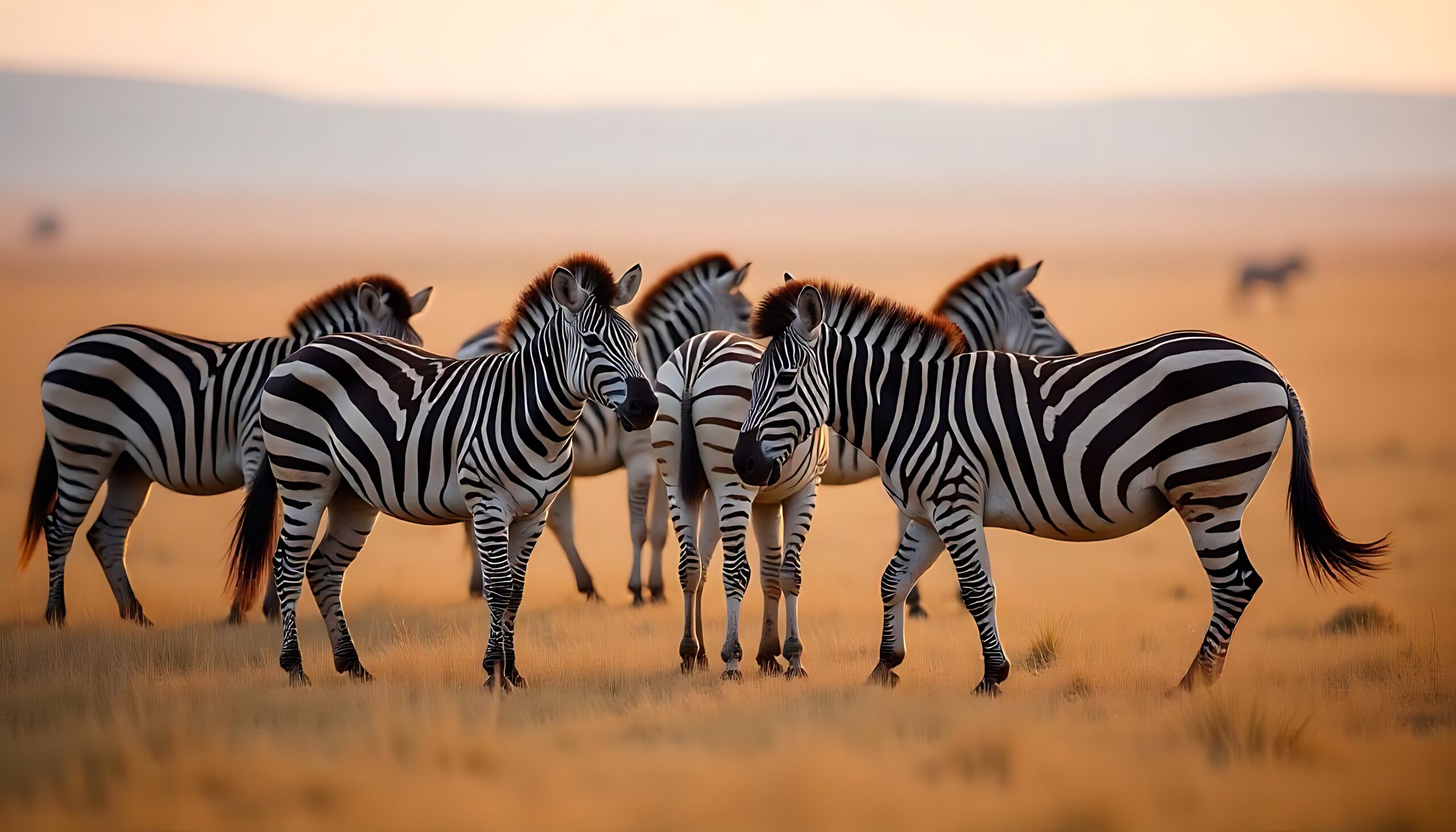
African mammals called zebras are distinguished by their characteristic black and white stripes, which serve as a barrier against horseflies. Because they sustain the carnivores in their environments, zebras are a significant prey species. Zebras are mostly found in a variety of African environments, from grasslands and savannahs to hilly areas.

15 Amazing Facts About Zebras
- The quagga is an extinct zebra species. In an Amsterdam zoo, the last known quagga passed away in 1883.
- The Grévy’s zebra, which may grow up to 5 feet tall at the shoulder and weigh between 350 and 450 kg, is the largest zebra species and the largest wild animal of its kind.
- With an estimated population of between 500,000 and 750,000, the Plains zebra, sometimes referred to as the common or Burchell’s zebra, has the largest population.
- Zebras use a variety of vocalizations, such as barking, snorting, and braying. To convey their feelings, they employ these techniques.
- The zebras with the most stripes are Grevy’s. They have extremely thin stripes. There are fewer stripes on mountain zebras. Their back ends have extra-wide stripes. The plains zebra has the fewest stripes. Their stripes are only half up and down.

- The zebra species with the lowest lifetime is the Grevy’s zebra, which typically lives 12–13 years in the wild. This is far less than the more than 20 years that mountain zebras or up to 40 years that plains zebras can live.
- Grevy’s zebras and mountain zebras typically eat taller, coarser grasses and other flora. Although they will consume tall grasses, plains zebras prefer short, green grasses. The higher grasses are more resilient to drought.
- The most well-known term for a group of zebras is a “dazzle.” They are sometimes called a herd or a zeal.
- Zebras may run as fast as 64–65 km/h to avoid lions and hyenas, among other predators.
- By locking their front knee joints, zebras can fall asleep upright and quickly escape predators.
- To get ready for actual competition, zebras, particularly young males, participate in practice fights.
- Zebras have a gestation span of 11 to 13 months and are polygynous, year-round breeders.
- Males often wait until age 6 to become dominant and mate, while females reach sexual maturity between the ages of 3 and 4.
- Important Dangers to Zebra Populations: Loss of Habitat and Encroachment, Hunting and Poaching, Drought, Disease, Predation, and Climate Change.
- In 2019, a unique polka-dotted zebra foal named “Tira” was found in Kenya’s Masai Mara National Reserve, causing a stir throughout the world. Due to a genetic abnormality called pseudomelanism, the foal has a black coat with white dots in place of stripes.

Conclusion
Zebras are interesting mammals that play a significant part in African ecosystems and are distinguished by their distinctive black and white stripes. The biodiversity of nature depends on the conservation of zebras. This can be achieved through stopping illegal poaching, supporting wildlife conservation initiatives, and protecting natural habitats. Zebra population protection is also greatly aided by national parks and wildlife reserves. People may contribute to ensuring that future generations will continue to witness zebras flourishing in the wild by increasing awareness and supporting conservation initiatives.
