5
Introduction to Giraffe
The tallest mammals on Earth are giraffes. A tower is a group of giraffes. Giraffes only get ten minutes to two hours of sleep per day. The majority of a giraffe’s life is spent standing straight. They have a twenty-five-year lifespan. They are just larger than humans, yet they have the same amount of neck bones. To protect itself from sunburn, the giraffe’s tongue is blue. Their brown patches could help shield them from the sunlight. Giraffes are known for their strong hearts, sharp minds, amazing spotted coats, lightning-fast babies, exceptional sprinting skills, and even a fondness for swimming.
Types of Giraffe
There are four types of giraffe. the northern giraffe, southern giraffe, Masai giraffe, and reticulated giraffe. The following sections discuss distinguishing characteristics, habitats, and adaptations of the four giraffe species.
Northern Giraffe
The Northern giraffe used to be widely distributed over North and Central Africa, but it is currently located in isolated groups in South Sudan, Ethiopia, Chad, Cameroon, and Western Kenya. There are a number of subspecies within this species, such as the West African giraffe, Kordofan giraffe, and Nubian giraffe, each with a unique range and conservation issues. Because their polygonal patches can be orange, reddish brown, or chocolate, the northern variety has the paler ones; however, their color intensity is not as strong as that of other giraffe species. The giraffe has a distinct digestive system. Their esophagus has a sophisticated digestive system with four chambers and powerful muscles that enable them to transfer food from the stomach to the mouth, which is concerning. Giraffes enjoy eating and grazing from trees. It has an abundance of lengthy growth and grass to eat because it lives in the open savannah of African nations. Northern species of giraffes are vegetarians as well. On their heads, northern giraffes have two unique bumps that resemble horns. We refer to them as ossicones. Compared to southern giraffes, they have larger and longer ossicones. Bulls, the male northern giraffes, frequently have a third ossicone. This extra bump is located right over their eyes in the center of their forehead. Its length ranges from 3 to 5 inches.
Southern Giraffe
Southern giraffes are found in southern Africa’s savannas and forests, which include nations like Tanzania, Namibia, South Africa, and Botswana. There are a lot of Southern giraffes, and their numbers are still increasing. Additionally, there aren’t many predators that prey on healthy adult giraffes, allowing the population to continue expanding. Southern giraffes spend much of their time eating grass, with feeding being their main daily activity. In order to avoid the huge thorns of acacia trees, which make up a big portion of their diet, they have a special chewing mechanism that is characterized by slow and meticulous chewing. The Southern giraffe, which stands between 4.3 and 5.7 meters tall, is characterized by large, rounded brown patches with fine, star-like patterns set against a lighter tan to beige background. Its long legs and neck feature spots that extend down to the lower limb, and it has long eyelashes for protection.
Masai Giraffe
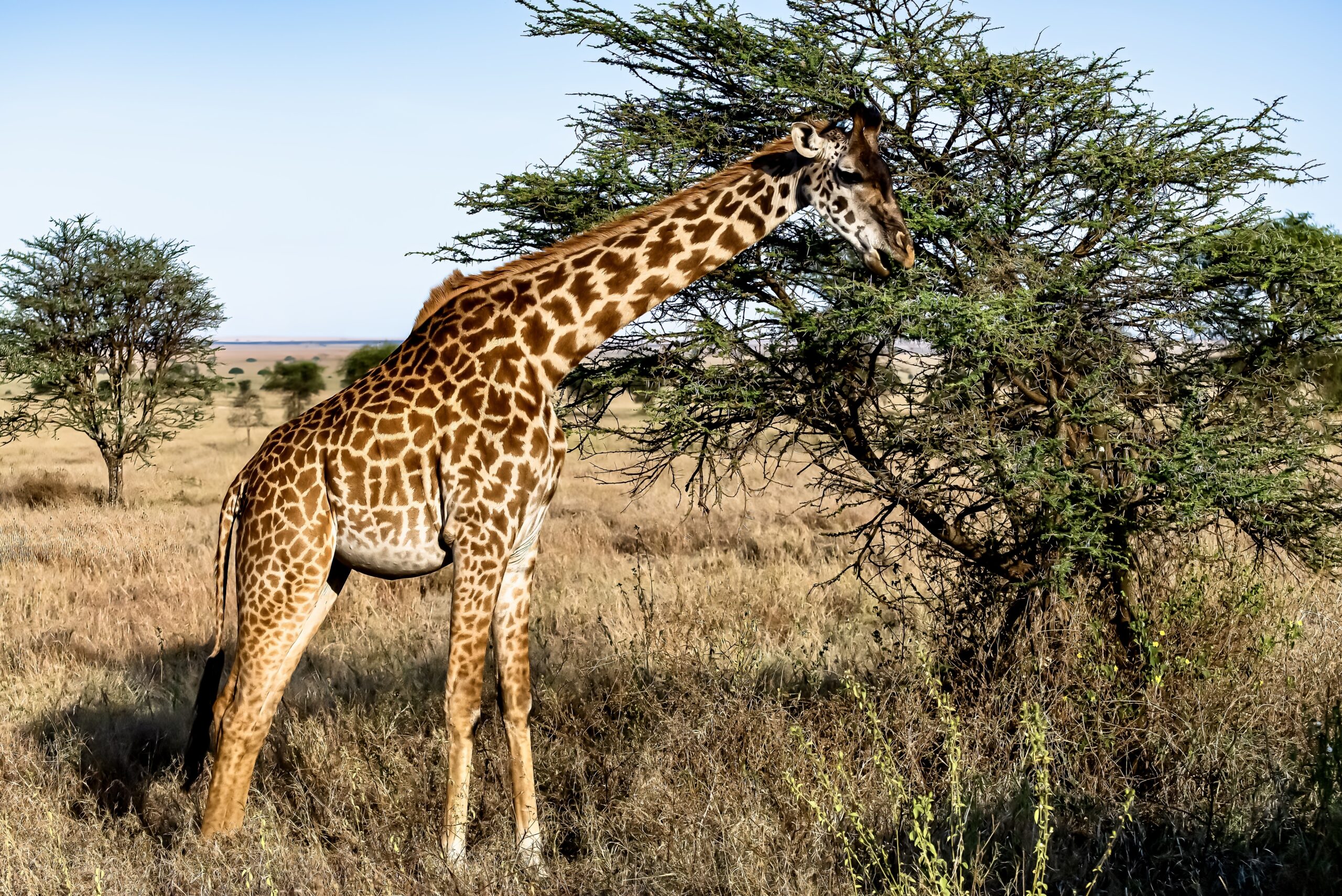
In the wild, Masai giraffes can live up to 10 to 15 years, and in captivity, they can live up to 20 to 27 years. Compared to other giraffes, Masai giraffes live in comparatively smaller herds. The people are very understanding to one another, particularly the women. Only when it comes to mating or group leadership do male Masai giraffes exhibit hostility. The savannas, grasslands, and open woods of central and southern Kenya, Tanzania, and Zambia are home to Masai giraffes, the biggest subspecies of giraffes. They are browsers and particularly like Acacia plants, but they also eat fruits, flowers, and prickly branches. They remove leaves from prickly branches with their lengthy, prehensile (grasping) tongues and hard lips. Masai giraffes have large, ragged-edged, dark brown patches that resemble vine leaves and are divided by creamy-brown lines. Mature males may have an extra, distinct third ossicone between the eyes, but both sexes have two hair-covered ossicones. and there can be a tiny bump on the back.
Reticulated Giraffe
Native to the Horn of Africa, reticulated giraffes are mostly found in northern and northeastern Kenya; smaller, isolated populations may also exist in southern Ethiopia and southern Somalia. With a height of 14 to 19 feet, they are among the tallest terrestrial animals. They have two to five skin-covered horns called ossicones, lengthy necks, and specialized circulatory systems. The characteristic coat of reticulated giraffes consists of broad, liver-colored, polygonal patches that are divided by a clear, thin network of white lines. The leaves, branches, flowers, and fruits of acacia and combretum trees make up the majority of their diet. They negotiate prickly branches by using their prehensile lips and lengthy, rough tongues. They only get a few hours of sleep each day, usually while standing up, and only for a few minutes at a time. Over the course of their lives, each person’s unique geometric pattern may change color.
Giraffe Behavior and Social Life
The giraffe has many admirable qualities. Among these qualities are their protectiveness, patience, cunning, intelligence, and grace. Giraffes communicate using visual signals and probably use infrasonic sounds; however, they hardly ever make loud noises. Due to their non-territorial nature, giraffes can be found in a variety of settings, with the availability of food and water determining their home ranges. In communal nursery groups, or “crèches,” where one mother looks after multiple calves, females develop long-lasting, devoted bonds with one another. In order to assert dominance or mating rights, male giraffes fight by “necking,” which involves swinging their long necks to bang their hefty heads and ossicones (horn-like structures) against an opponent’s body. The weight of an adult giraffe is over 1,700 pounds, and they require up to 75 pounds of vegetation per day. The average home range of a herd is around 100 square miles, and there are no social problems when the herds cross over and share ranges.
Threats and Conservation status of Giraffe
The risks posed to giraffes by human activity include substantial habitat loss, fragmentation, and degradation as a result of infrastructural development, agricultural growth, and human settlement. Since giraffes require large tracts of savanna with an abundance of native plants and trees for food, habitat loss is one of the most urgent problems. Degradation, fragmentation, and eventual loss of habitat result from the growth of agriculture and towns as human populations increase. Giraffes are finding it more difficult to locate water and nutrient-dense vegetation due to extended dry spells and changing rainfall patterns. Giraffes are hunted for their meat, hides, and tails, which are released for sale illegally or used in customs.
The Giraffes have established numerous objectives to protect the natural environments that these enormous animals call home. For survival, giraffes need a huge quantity of area. Increase awareness of the giraffe population fall to attract attention from around the world. Giraffe hunting must be prohibited, and giraffe-derived goods must be discontinued. Human-wildlife conflict is decreased by encouraging information about giraffes, providing training in sustainable agriculture, and involving local communities in their protection. Reforesting important areas with acacia trees contributes to the expansion of food sources.
If you enjoy learning about wildlife, you can also read our detailed article on https://animalstudieslab.blogspot.com/2026/03/snow-leopard-habitat-diet-threats-conservation.html to explore another fascinating giant of the animal kingdom.
Conclusion
Giraffes are magnificent creatures distinguished by their tall stature, characteristic spotted coats, and kind disposition toward others. All four of Africa’s major giraffe species—northern, southern, Masai, and reticulated—have distinct traits and environments. Because they aid in seed dispersal and vegetation control, these animals are crucial to the preservation of ecological equilibrium. But giraffe numbers are still under threat from illicit killing, habitat degradation, and climate change. To guarantee that these amazing creatures continue to flourish in the wild for upcoming generations, conservation initiatives, habitat restoration, and raising awareness around the world are crucial.


