60
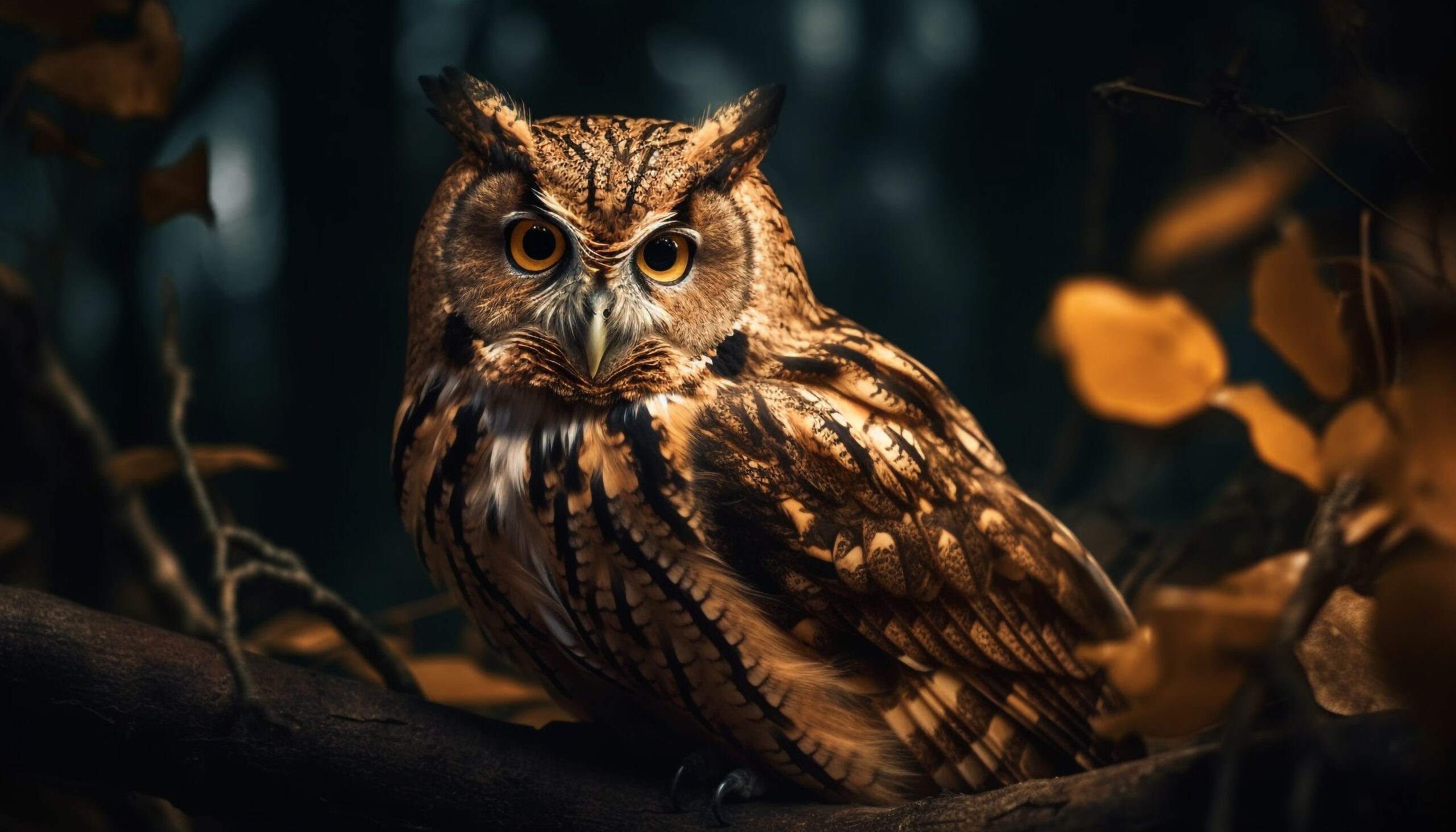
Owls are hidden and profoundly interesting birds known for their silent flight and sharp hunting skills.
The current reality is that they are unluckily losing habitat, with many species at risk of extinction.
FACTS:
- Owl eyeballs are tube-shaped and are immovable. Allow full focus and boost their depth perception.
- Owl can turn their necks to 270 degrees.
- Owls do not have teeth.

- There are over 250 species of owls in the world.
- A group of owls is called a ‘parliament.
- Different species of owl have ears that are not only placed asymmetrically on their heads but are also different sizes.
- Not all owls hoot! Barn owls screech, scops owls trill and some species whistle instead.
- Forward-facing eyes give these owls BINOCULAR vision to better estimate distances to moving prey.
- Owls are important for controlling rodent populations and maintaining ecological balance.
- Most owls are able to fly silently through specialised wing feather adaptations that reduce noise, which is critical for nocturnal hunting.
- Many owl species have unexpectedly long, powerful legs hidden beneath their dense, fluffy feathers.
- Owl wings are broad and span 850 mm.
- The heart-shaped facial disc of a BARN OWL is highly specialised and has two concave depressions that help funnel sound to the ears.
- A single barn owl can eat up to 1000 mice per year.
- Owls cannot see things clearly up close; they are farsighted.
- Owls have three eyelids, including a special third eyelid called the nictitating membrane. Along with the upper and lower lids, it helps protect and keep their eyes clean.
- Their colors and patterns blend perfectly with their surroundings, helping them stay hidden from predators and sneak up on unsuspecting prey.
- Owls have zygodactyl feet, meaning two toes point forward and two point backward. This unique arrangement gives them a strong grip, helping them hold onto branches and firmly grasp their prey.
- Some owl species don’t build their own nests. Instead, they make themselves comfortable in existing spaces, such as tree cavities, cliffs, or abandoned nests, rather than creating a new one from scratch.
- Owls show a fascinating trait called reverse sexual dimorphism, where the females are larger and heavier than the males.
Types of owls and their fun facts
Great Horned Owl
Their horns aren’t ordinary horns—they’re feather-topped structures called plumicorns, which help them blend into their surroundings while also revealing their mood and emotions.
Snowy Owl
Snowy owls have a big appetite. They can eat around 1,600 lemmings and small rodents each year, making them quite the hunters in the Arctic.
