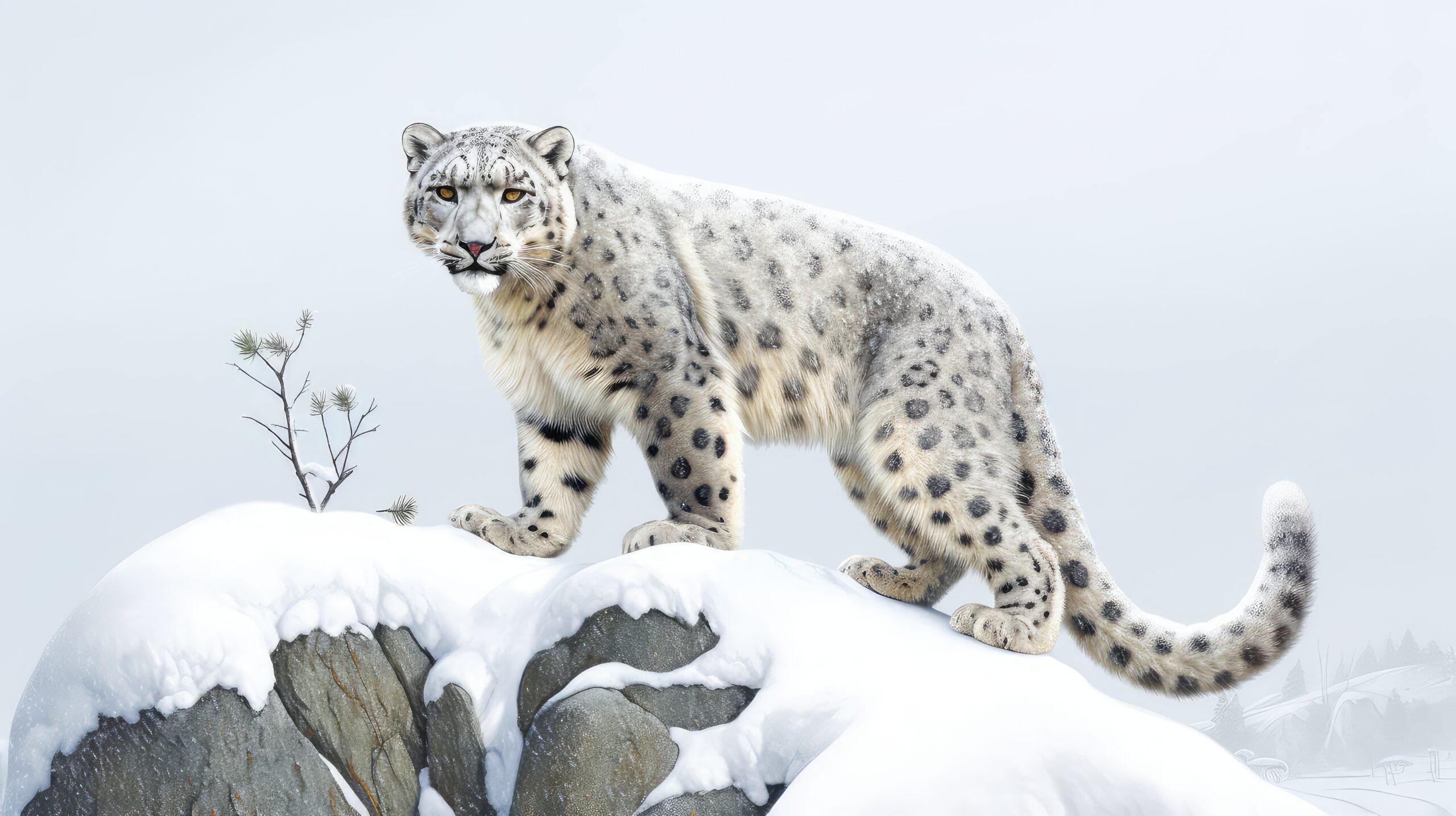
The snow leopard is a remarkable predator and a wild cat that is found in the high mountains of Central and South Asia. Snow leopards are also known as the “ghost of the mountains.” In the Himalayan regions, this endangered wild cat is crucial to preserving ecological balance. Snow leopards are highly adapted to cold, rocky environments with thick fur, large paws, and a long tail.
Snow leopards mainly prey on wild sheep and goats, and sometimes smaller animals may also form part of their diet. In mountain ecosystems, protecting snow leopards is crucial for maintaining freshwater resources and biodiversity. In this article we will read about snow leopards’ habitat, diet, food chain, physical adaptations, behavior, threats, and conservation.
Snow Leopard Food Chain
Mountain plants → Herbivores → Snow leopard
The snow leopard food chain starts with plants and continues through herbivorous animals that feed on vegetation. The producers at the beginning of the food chain are grasses, shrubs, herbs, and other vegetarians.
Some of the herbivore examples are blue sheep, argali, Himalayan ibex, and many more. Herbivores form an important link between the predator and the mountain vegetarian. The snow leopard is on the top of the food chain. It also eats smaller animals such as marmots, pikas, hares, and birds when available. If the population of natural prey starts declining, it will be difficult for the snow leopard to find food.
A healthy food chain helps to maintain the ecological balance of a high-altitude ecosystem.
If you’re fascinated by striped animals, don’t miss our guide on https://animalstudieslab.com/15-mind-blowing-facts-about-zebras-you-probably-didnt-know/
Physical Features of the Snow Leopard
The snow leopard’s body is specifically designed to survive in cold mountain climates. They typically measure between 39 to 51 inches in length, with females being somewhat smaller than males. Their tail length varies from 31 to 39 inches, and their shoulder height is about 24 inches. Typically, female snow leopards weigh between 77 and 88 pounds, while males average between 99 and 121 pounds.
Snow leopards can travel on snow without sinking due to their huge paws, which act as natural snowshoes. Cold air is warmed by their broad, short nasal cavity before it enters the lungs. Additionally, in freezing alpine locations, their small, rounded ears aid in preventing heat loss.
Snow leopards’ strong limbs are among their most striking characteristics. They can pursue prey in rough mountain environments by using their ability to jump up to 30 feet (10 meters) in a single leap. In addition to helping them stay balanced when moving, their long tail, when wrapped around themselves, keeps their body warm. Unlike many large cats, snow leopards cannot roar.

Habitat and Distribution of the Snow Leopard
The habitat and distribution of the snow leopard extend across twelve countries, including Afghanistan, Bhutan, China, India, Kazakhstan, Kyrgyzstan, Mongolia, Nepal, Pakistan, Russia, Tajikistan, and Uzbekistan. Snow leopards often inhabit the Himalayas between 3,000 and 5,400 meters above sea level. These cats can be found at lower altitudes of 1000 meters in Mongolia and Russia.
Particularly grasses and small plants may grow on the steep mountain slopes at the snow leopard’s usual height, which has a cold and dry climate. Snow leopards are found in Central Asian mountains. There are just 3,920 to 6,390 snow leopards remaining in the wild, despite the fact that their habitat range is 2 million km², or roughly the area of Greenland or Mexico.
Up to 60% of all snow leopard habitat is found in China, making it one of the most important nations for our conservation efforts.
Diet and Hunting Behavior of the Snow Leopard
As a carnivorous predator, the snow leopard mostly hunts wild mountain herbivores such as argali, markhor, Siberian ibex, and Himalayan blue sheep (bharal). In addition to feeding on smaller animals like marmots, hares, pikas, and game birds, it may kill prey up to three times its own body weight. Sheep and goats are among the livestock that snow leopards may prey on when there is a lack of wild prey. They approach their prey in silence by using natural camouflage and steep, rocky terrain. They rely on quick, strong chases and unexpected pounces rather than long-distance pursuit. Snow leopards may stay close to the carcass for several days in order to feed, and they usually kill by biting the throat or neck. They usually hunt once every eight to ten days and are most active during dawn and dusk.
Want to learn more about these fascinating flightless birds? Explore our complete guide to https://animalstudieslab.com/20-amazing-penguin-facts-you-didnt-know/
Threats and Conservation Status of the Snow Leopard
The snow leopard’s existence in high-altitude alpine environments is threatened by a number of major factors. By raising temperatures, decreasing snow cover, and influencing the availability of natural prey, climate change is changing delicate alpine environments. Conflict between humans and wildlife is another significant problem because, when wild prey becomes limited, snow leopards may prey on livestock, prompting herders to kill them in retaliation. Their movement is further disrupted, and prey numbers are decreased by habitat loss and fragmentation brought on by road building, mining, infrastructure development, and cattle overgrazing. Because snow leopards are pursued for their fur and body parts, poaching and illegal trafficking also present serious risks.

Conclusion
In Central and South Asia, the snow leopard is an important indication of ecosystem health in addition to being a spectacular predator of the high mountains. Because of its strong physical adaptations and unique hunting techniques, this hidden large cat is essential to preserving ecological balance. Its survival is still threatened by poaching, habitat fragmentation, climate change, and conflicts between humans and wildlife. Freshwater resources, biodiversity, and delicate alpine ecosystems are all at risk when snow leopards are protected. Securing a future for this endangered species requires stepping up conservation efforts, encouraging community participation, and guaranteeing sustainable development in mountainous areas.
FAQS
1. Where do snow leopards live?
Snow leopards live in the mountain ranges of Central and South Asia. They are mainly found in countries such as Afghanistan, Russia, Pakistan, China, Nepal, and several other countries.
2. How do snow leopards survive in the cold environments?
Snow leopards have thick fur, large paws, long tails, and short nasal passages, which help them to survive in cold temperatures, snow, and steep terrain.
3. Do you think snow leopards are endangered?
Snow leopards are classified as vulnerable rather than endangered. They face serious threats like habitat loss, climate change, and human-wildlife conflict. Conservation efforts need to be taken to stop population decline.
