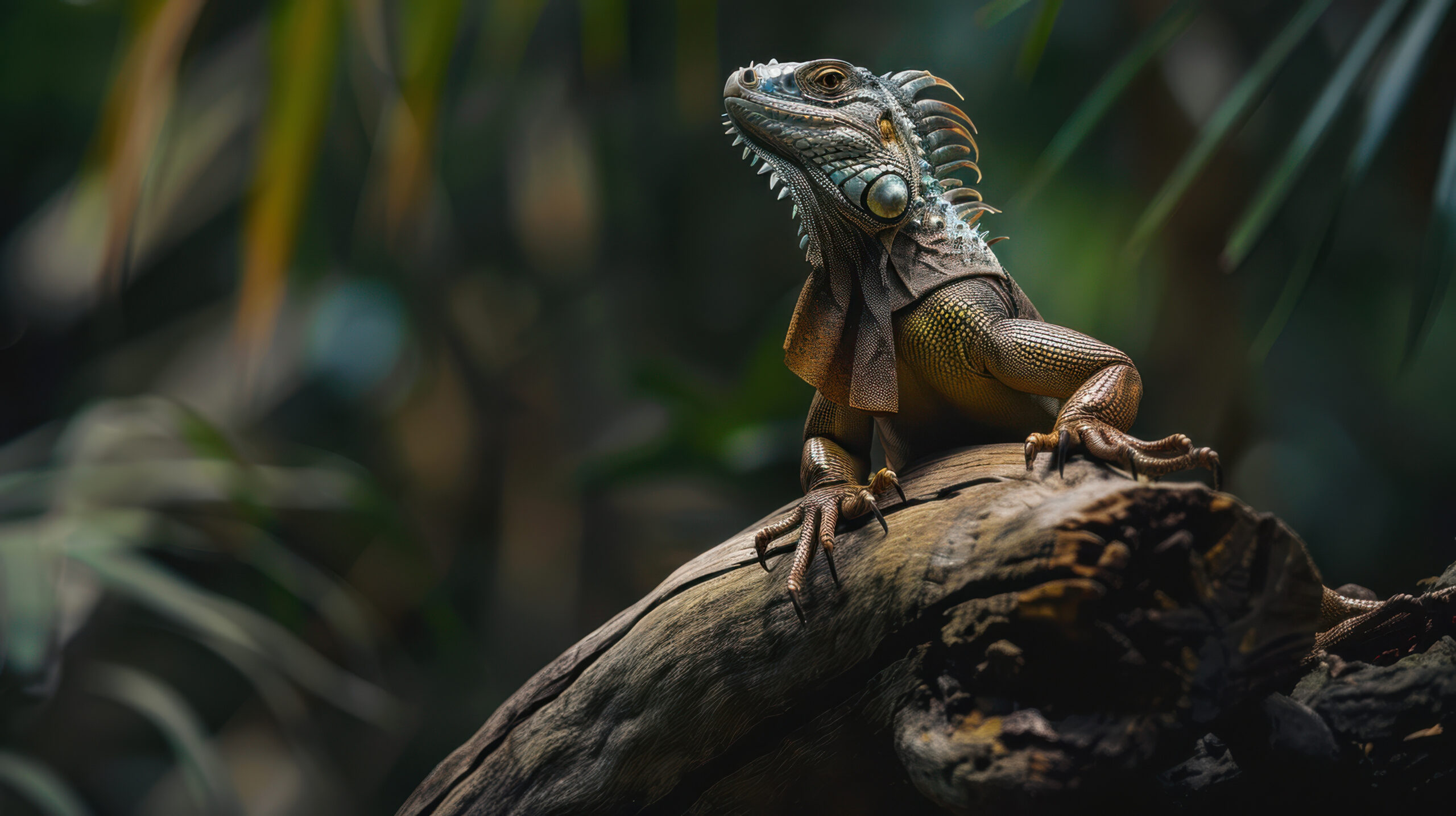
Have you ever wondered how a giant lizard like the Komodo dragon became one of the most powerful predators on Earth?
Varanus komodoensis is the scientific name for the Komodo dragon, which is sometimes referred to as the Komodo monitor. It is unique to several Indonesian islands and is the biggest lizard currently in existence. The Komodo dragon is nearly ten feet long and has a poisonous bite. Their microorganisms produce saliva, and their glands discharge venom. They are also among the most patient predators. To understand this fascinating reptile better, let’s explore the habitat, diet, behavior, and unique adaptations of the Komodo dragon.
If you want to learn about another fascinating animal known for its bamboo diet and conservation story, explore our full article on the giant panda here:
https://animalstudieslab.com/giant-panda-and-red-panda-facts-habitat-diet-threats-and-conservation/
Which Islands Are Home to the Komodo Dragon?

Komodo dragons are mostly located in Indonesia, where they can be found on both Komodo Island and Rinka Island. They may be found on both sandy beaches and arid, high mountains. Their population is among the biggest. Water is not where they reside. Although they cannot survive in water, they are still able to swim. They occasionally do, and they typically require hot spots that allow them to control their body temperature, such as beaches for sunbathing.
How Do Komodo Dragons Hunt, and What Do They Eat?
As carnivores, Komodo dragons consume large animals, including pigs, water buffalo, and deer. They consume the prey in big pieces. They consume nearly everything, even horns and bones. They hunt for Javan rusa deer, also called rusa timorensis, but they eat nearly every species. Because they hunt live prey yet primarily consume dead mammals, Komodo dragons are frequently referred to as opportunistic hunters. When it comes to young Komodo dragons, they primarily consume eggs, lizards, and insects. They wait patiently for their prey, hide themselves in shrubs and grasses, and use their sense of smell to locate prey up to ten kilometers away. They don’t hunt in packs and frequently pursue their victim until it passes away from blood loss following a single bite. Typically, they engage in hunting alone. Even up to 80% of their body weight can be consumed in a single meal.
Do Komodo Dragons Attack Humans
Yes, Komodo dragons can eat humans. They have strong physical features, such as sharp claws, massive muscles, and zigzag teeth. There are rare cases where humans have been eaten by Komodo dragons. They attack humans, specifically when they are alone. Their bites can cause serious trauma, and their venom glands can prevent blood from clotting. They have one of the most dangerous bites, which is why they are known as dangerous predators.
How Do Komodo Dragons Reproduce and Care for Their Eggs?

The reproduction cycle of Komodo dragons is broken up into months. Mating occurs in May and August, egg-laying occurs in July and September, and the eggs are incubated for seven to eight months. Additionally, a female Komodo can fertilize her own eggs using her ZW sex chromosomes, which is one of their unique reproductive traits. “ZZ” denotes a man, whereas “ZW” denotes a woman. Female Komodo dragons tend to shield the holes where their clutches are located, but male Komodo dragons do not guard the eggs.
Discover interesting facts about the owl by reading our detailed guide here:
https://animalstudieslab.com/15-amazing-owl-facts-you-didnt-know/
How Is the Komodo Dragon Different From Other Lizards?
The main distinction between Komodo dragons and other lizards is that, in contrast to other lizards, which are small monitor species, Komodo dragons are among the biggest, heaviest, and longest lizards in the world. In addition, Komodo dragons weigh a lot more than monitor lizards. Both the Komodo dragon and the monitor lizard are poisonous, but Komodo dragons have a unique venom gland. Additionally, Komodo dragons like dry locations and require heated areas, although they are limited to a portion of the Indonesian islands. Monitor lizards, on the other hand, are able to climb trees and adapt to a variety of settings, including deserts, coastal regions, and rainforests. When it comes to their behavior, monitor lizards are not aggressive, while Komodo dragons are extremely violent predators.
Komodo Dragon Island Gigantism
This is one of the most interesting subtopics in this article. Island gigantism is a phenomenon in which some animals living on islands become much larger than their mainland relatives. It can occur over many generations as animals adapt to the unique conditions of their island environment. No other animals can hunt these large lizards. They have very few natural predators. Komodo dragons became the main hunters of the island.
Why Are Komodo Dragons So Unique Among Reptiles?
- Female komodos can reproduce through parthenogenesis.
- Komodo dragons’ life span is commonly about 30 years.
- Komodo dragons sleep for 12 hours a day
- Komodo dragon length is 10 feet and weight is around 160 kilograms.
- Komodo dragons have 2.5 cm serrated teeth, and they have 60 teeth.
- Komodo dragons can taste the air from their yellow tongue, from which they can find the prey from around 9 kilometers away.
- They have a third eye on the top of their head, which helps them to balance their sleep cycle.
- Komodo dragons are excellent swimmers and can hold their breath for at least 20 minutes.
- Komodo dragons can eat humans if they are alone or they sense a smell of blood.
- A Komodo dragon’s maximum speed is up to 20 km/h.
Conclusion
The Komodo dragon now comes face-to-face with a number of threats despite its power. Because of its restricted range, habitat loss, climate change, and human activity can have an impact on its population. Maintaining biodiversity and ecological balance depend on protecting these reptiles. Conservation zones like Komodo National Park contribute to the preservation of these amazing species’ natural environment and guarantee that future generations can continue to learn about and see them.
Safety should always come first for visitors to Komodo dragon habitats. It is recommended that visitors maintain a safe distance from these animals, adhere to the instructions of professional guides, and refrain from approaching or disturbing them. Dangerous circumstances can be avoided by staying cool and carefully walking if a dragon is in the area.
Ultimately, the Komodo dragon serves as both a deadly predator and a significant representation of Indonesia’s distinctive nature. One of the most captivating reptiles in the world will continue to exist in the wild if this species is respected and protected.
For more scientific information about the Komodo dragon, you can visit the detailed species profile from the International Union for Conservation of Nature:
https://www.iucnredlist.org/species/22884/9396736
FAQS
1. What hunts a Komodo dragon?
Adult Komodo dragons are top predators, and no animal can eat them. On the other hand, young Komodo dragons can be eaten by other animals, so they face the risk of predation.
2. Do Komodo dragons have predators?
Young Komodo dragons hide from large predators until they grow larger, as they are easy targets for predators. Adult Komodo dragons are large in size, reaching up to 3 meters in length and weighing about 150 kg. Adult Komodo dragons also eat their own species. They are among the most powerful predators in the wild.
3. How do young Komodo dragons protect themselves from predators?
Young Komodo dragons hide in trees. They stay in trees until they grow larger. The food they acquire as baby dragons includes small bugs, lizards, and bird eggs, which can be easily found among the leaves and trees.
