Introduction

How Does a Polar Bear Survive in One of the Coldest Places on Earth?
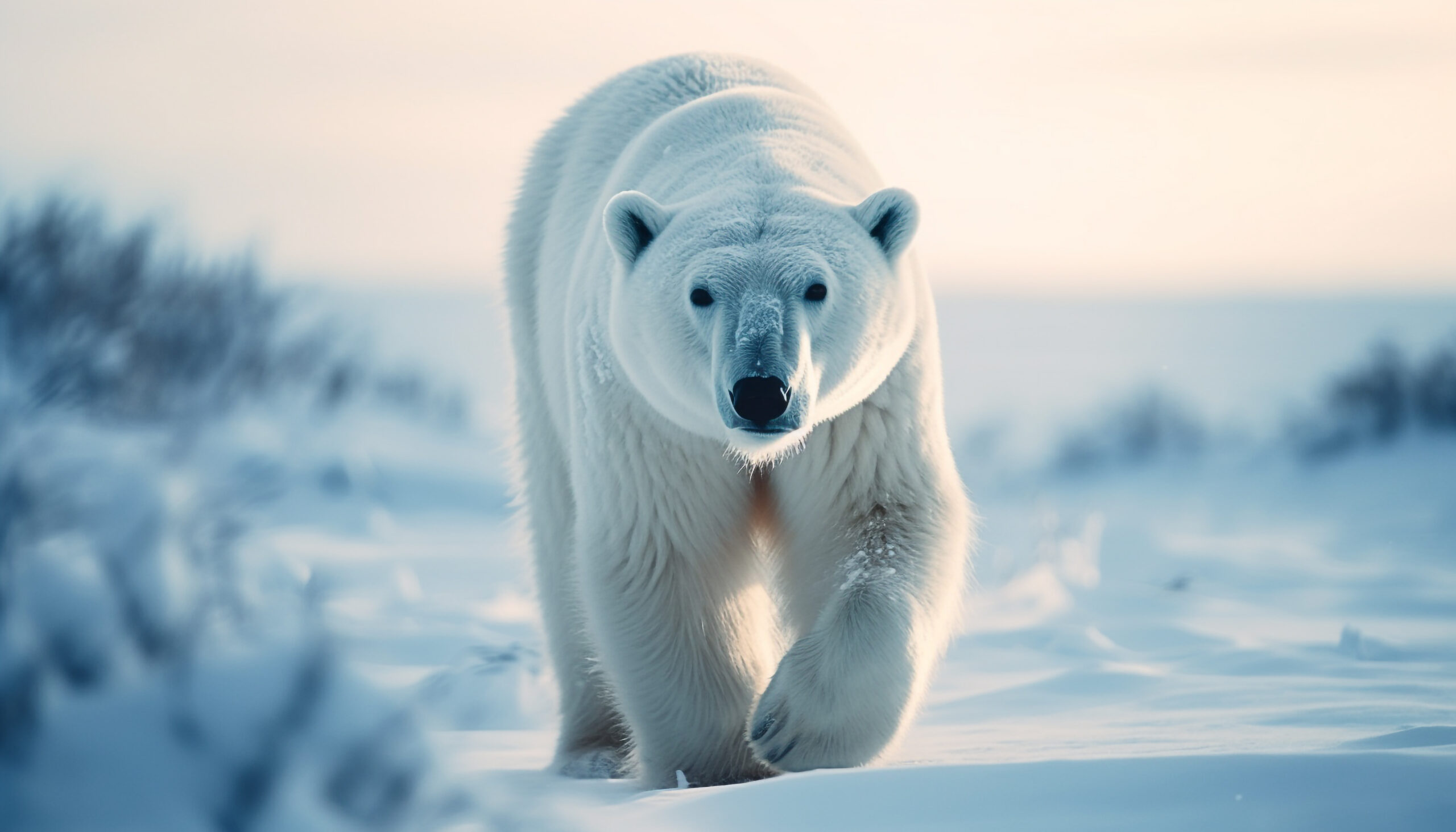
Polar bears can survive below 40 degrees Celsius. Their physical characteristics and insulation enable them to persevere in one of the world’s coldest regions. They have a thick layer of fat, or blubber, that is 11.4 cm thick and serves as insulation for them in freezing water and on land. In the second stage, they have two layers of fur that keep them warm and an outer covering of long guard hair that acts as a raincoat and prevents water from getting to the skin. Additionally, their short tail and tiny ears. reduce the amount of surface area that is exposed to the cold, and their black skin improves in their ability to absorb solar heat. Finally, their feet are warm. It indicates that they have fur-covered paws and tiny ridges on their foot pads that support them and give them better grip on ice and insulation.
How Does a Polar Bear Hunt in the Icy Waters of the Arctic?
How Do Polar Bears Reproduce in the Harsh Arctic Environment?
Why Are Polar Bears Struggling to Survive in the Changing Arctic?

https://in.pinterest.com/pin/1134484962400764883
What Efforts Are Being Made to Protect Polar Bears in the Arctic?
We must take a few minor steps that will benefit polar bears in order to conserve them. Purchasing green energy is the first step. In order to lower greenhouse gas emissions, we should start utilizing renewable energy sources like wind, low-impact hydro, and landfill gas. Eco-friendly energy is what we should use. Second, since LEDs require less energy and have an environmentally beneficial manufacturing method, we should switch from light bulbs to LEDs. And as a result, using LEDs will reduce pollution. Additionally, we ought to start making donations to entities that can conserve polar bears, like Polar Bear International, the WWF World Wildlife Fund, and regional Arctic research organizations.
What Are Some Surprising Facts About Polar Bears?
- Polar bears’ fur is not white; it is transparent.
- Polar bears sleep for around 7-8 hours a day.
- Polar bears can swim up to 100 miles continuously.
- Polar bear average life span is 15-18 years.
- Mother polar bear milk provides 31% fat, which gives rapid growth to their cubs.
- 70% of the cubs do not live due to environmental conditions.
- Polar bears see humans as their food, and they are highly aggressive and dangerous.
- Polar bears maintain hygiene so that they can keep their fur insulating.
- Polar bears bite the neck when they are fighting for food or a mate.
- Polar bears can eat up to 45 kg in one sitting.
While polar bears thrive in the icy Arctic, penguins have their own unique adaptations to survive in cold environments. Learn more about penguins and their amazing adaptations https://animalstudieslab.com/20-amazing-penguin-facts-you-didnt-know/here:
Conclusion

FAQS
1. How fast can polar bears run on land?
2. How far can polar bears travel in search of food?
Polar bears can travel hundreds of kilometers across sea ice in search of food.
3. How big can a polar bear grow?
They can grow up to 3 meters in length, and they weigh between 350 and 700 kg
4. In which areas can polar bears not survive?
5. Can polar bears survive without sea ice?
Without sea ice, it becomes very difficult for polar bears to hunt, travel, and raise their cubs.
